Koh Lanta When the Rain Arrives and the Island Slows Down
A practical guide to Koh Lanta When the Rain Arrives and the Island Slows Down.
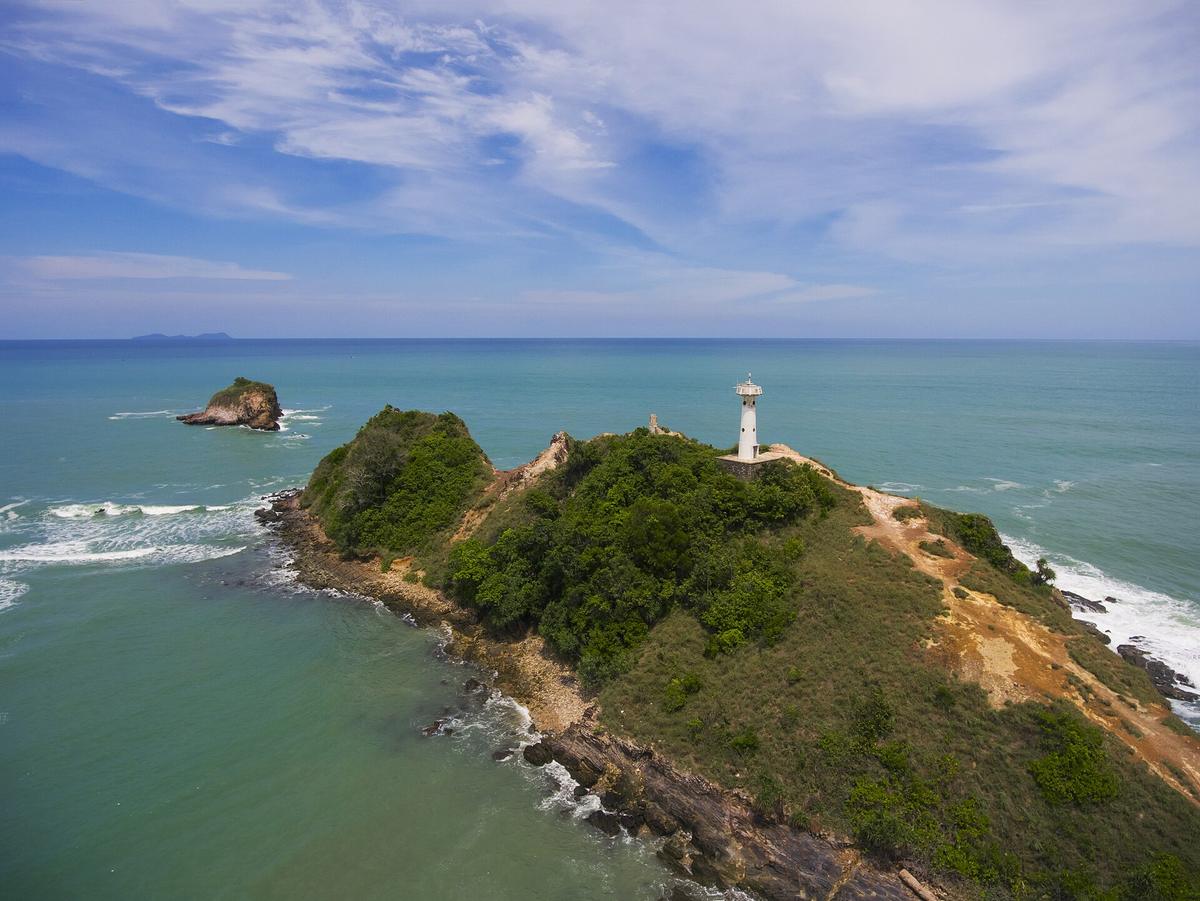

What the Rainy Season Actually Means on Koh Lanta
The southwest monsoon shapes life on Koh Lanta from roughly May to October. Warm, moisture-laden air sweeps in from the Andaman Sea, delivering bursts of rain that transform the island's palette from sun-bleached gold to deep, glossy green. This is not a period of constant downpour. Even during September and October, the two months with the highest number of rainy days, roughly 13 days per month record less than 1 mm of rain. A typical week mixes showers with usable dry hours, leaving generous windows for exploration between the clouds.
August claims the title of wettest month, with an average rainfall of 342 mm. October brings the most frequent rain, averaging 20.2 days with at least a trace. The rhythm is distinctive: mornings often start clear, clouds build by early afternoon, and rain arrives in heavy but relatively short bursts before the sky clears again. Understanding this pattern is the key to enjoying the island when it slows down.
Getting to the Island When the Boats Stop
During the dry months, travellers hop between Koh Lanta and neighbouring islands on direct passenger ferries and speedboats. The rainy season changes that equation. Most direct services to and from Phi Phi, Phuket and the southern islands are reduced or suspended entirely. The reliable year-round access becomes the road route via the car ferry.
The car ferry runs between Ban Hua Hin pier on the Krabi mainland and Khlong Mak pier on Koh Lanta Noi. The operator, Songserm Tran Service, lists daily crossings. Once on Koh Lanta Noi, the Siri Lanta bridge, opened in April 2016 and spanning roughly 650 metres, connects directly to Koh Lanta Yai without the need for a second ferry. This overland link means the island remains reachable even when the sea route network contracts. Before travelling, confirm the current operating hours and fares directly with Songserm Tran Service or check the Tourism Authority of Thailand's official page for Ko Lanta, as schedules can change.
Which Islands Close and What Stays Open
The seasonal closures on Koh Lanta follow a specific logic. The Department of National Parks closes the offshore islands, not the mainland national park areas. In 2026, Koh Rok closed from 1 June to 30 September, while Koh Haa, along with Hin Daeng and Hin Muang, closed from 1 August to 30 September. Both were scheduled to reopen on 1 October. These dates are set annually and depend on weather and park conditions, so the exact closure window can shift from year to year.
What remains open is the Mu Ko Lanta National Park headquarters at Laem Tanod, at the island's southern tip. Its trails and ranger stations do not close during the rainy season. Only the offshore islands are subject to seasonal closure. This means you can still hike through the park's interior and stand at the lighthouse viewpoint, watching monsoon clouds stack over the Andaman Sea. Before booking any boat trip, verify the current year's closure schedule on the Department of National Parks, Wildlife and Plant Conservation website.
The East Coast Alternative
When the west coast beaches face churning swell and strong riptides, the island's sheltered east coast offers a completely different experience. Tung Yee Peng mangrove forest remains accessible year-round. Its tidal channels are protected from the open-sea conditions that batter the sunset-facing shores, making it possible to kayak or take a longtail boat trip through the mangroves even during the wettest months.
This is a practical recommendation rather than a measured comparison: if your goal is to be on or near the water during the rainy season, prioritise the east coast's mangrove channels over west coast beaches. The experience is different, quieter and greener, but it trades the classic Andaman beach panorama for a close-up view of the island's estuarine ecosystem. Both have their appeal, and the rainy season naturally tilts the balance toward the sheltered side.
Water Safety and What to Watch For
The UK Foreign, Commonwealth and Development Office identifies Thailand's rainy season as generally May to October and issues a specific warning: people have drowned in strong riptides, especially during the monsoon. The same advisory notes that jellyfish can swim close to shore during this period and that stings can be fatal. On 11 June 2026, Mu Ko Lanta National Park temporarily closed several sites after Portuguese man o' war washed ashore.
These are not reasons to avoid the island. They are reasons to choose your swimming spots carefully. West coast beaches bear the full force of the southwest monsoon. Riptides are a genuine hazard. The east coast's natural shelter offers a safer alternative for entering the water, though no location eliminates risk entirely. Pay attention to warning flags and local advice, and if conditions look rough, stay out.
The Price of Solitude
The rainy season reshapes Koh Lanta's economics. Accommodation prices drop significantly, with some luxury resorts offering discounts of 50% or more compared to high-season rates. The tradeoff is that individual hotels and resorts vary in their seasonal operations. Some close entirely from May to October. Others remain open year-round but with reduced facilities, fewer dining options or limited housekeeping schedules.
This is where direct confirmation becomes essential. A resort that advertises year-round operation may still close its pool bar or reduce its restaurant menu during the low season. Before booking, contact your chosen accommodation directly or check their official website for their current seasonal operating status. The savings can be substantial, but the experience will differ from a high-season stay. For some travellers, the quiet, the lower prices and the dramatic monsoon skies more than compensate for fewer facilities.
Sources and verification
- lantaadamtour.com — Research source checked for this guide
- gov.uk — Research source checked for this guide
- thaipedia.asia — Research source checked for this guide
- lantaadamtour.com — Research source checked for this guide
- koh-lanta-island.com — Research source checked for this guide
- koh-lanta-island.com — Research source checked for this guide
Read next
-
 Phuket
Pick a Phuket beach by airport transfer time, noise level after dark, and whether you want nightlife, family shallows, or a surf break.
-
 A Month in Southern Thailand With Three Island Bases
A practical guide to A Month in Southern Thailand With Three Island Bases.
-
 Best Time to Visit Thailand and Bali Two Monsoons Three Coasts
Two monsoon systems, three coasts, one calendar: when to visit Thailand and Bali so you chase sun not storms, with month-by-month weather and pricing.
-
 Thailand Island Hopping Ferries How the Islands Actually Connect
Ferry connections across Thailand's islands and Bali to Nusa Penida: real door-to-door transfer times, speedboat safety, and why transfer days eat a full day.
-
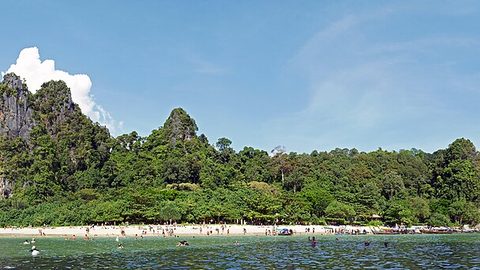 Thailand and Bali Itineraries for Two Weeks Three Weeks and What Fits
Realistic Thailand and Bali itineraries for 10 days, two weeks, and three weeks that account for ferry transfer days eating a full day each.
-
 Thailand and Bali Budget Islands What a Week Actually Costs Island by Island
Island-by-island weekly budgets for Thailand and Bali: real nightly rates, street food prices, scooter rental, and the hidden costs that blow the plan.
-
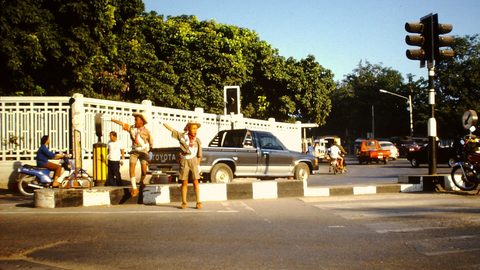 Scooters Boats and the Sea in Thailand and Bali What Actually Goes Wrong
Scooter rental scams, ferry safety in rough seas, and Nusa Penida road risks: what actually goes wrong in Thailand and Bali and how to avoid it.
-
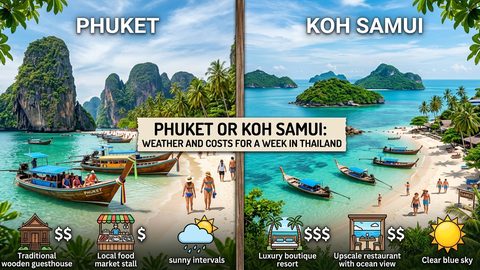 Phuket or Koh Samui for a Week in Thailand When Weather and Costs Matter
Phuket or Koh Samui for one week? Compare seasonal weather, flights, ferries, transport costs, and realistic daily budgets before choosing your base.
-
 When to Visit Thailand, Bali, and China on an Extended Asia Itinerary
How to sync Thailand, Bali, and China into one itinerary, plus which months make all three destinations work at the same time.