Ubud Rice Terraces and Yoga Shalas That Exist Beyond the Instagram Trail
Ubud's rice terraces are stunning but the famous ones are crowded by 9am. Here's which paddies are worth your morning, when they're greenest, and how to pair them with a yoga class.
- Flag
-

- ISO code
- ID
- Population
- 74,800
- Currency
- IDR
- Timezone
- Asia/Makassar
Ubud Rice Terraces and Yoga Shalas That Exist Beyond the Instagram Trail
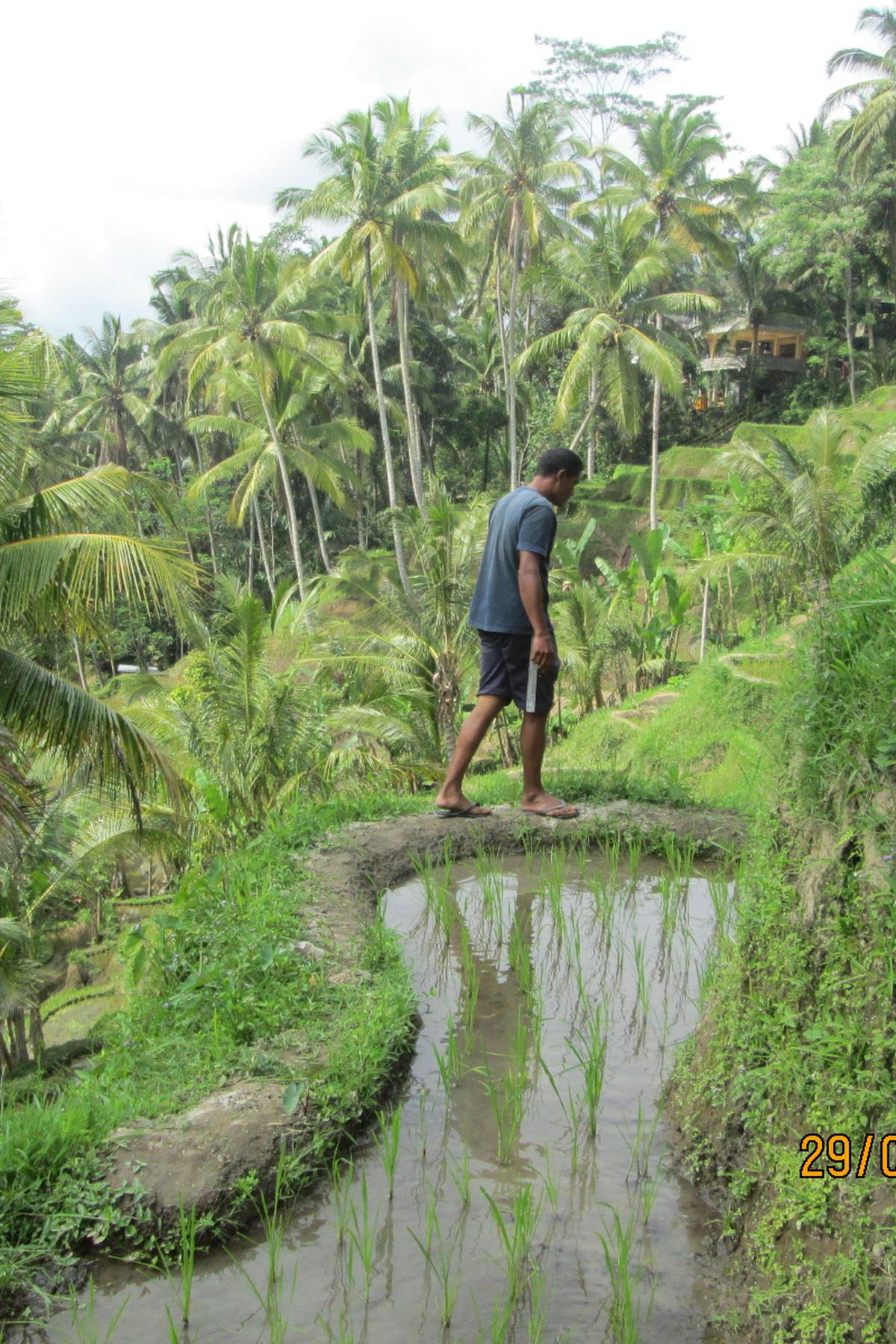
Arrive at Tegallalang by 06:30, before the first tour bus and the first donation request, and you get the postcard: terraced green curves dropping into a valley, morning light cutting across the hillside. By 09:00 the selfie queues form, the swing operators start their pitch, and a stream of scooters turns the access road into a one-lane bottleneck. The Ubud rice terraces are worth seeing. But the version that matters is the one you find on foot, away from the tripod spot, in the paddies that open up north of the centre and west toward Sayan. That version also happens to sit next to the best yoga rooms in Bali.
Tegallalang Rice Terraces: the Headliner and Its Limits
Ten kilometres north of Ubud centre, Tegallalang is a masterpiece of the Balinese subak irrigation system: stepped paddies that follow the contours of a steep valley. The entry fee is IDR 25,000 per person (the rate set in 2025; verify the current figure with the Tegallalang tourism office before you go). You pay that at one of several roadside counters, then walk down a path that descends through the terraces. The whole experience is structured: landholders charge for access to their sections, and you will be asked for a donation at the bottom. Budget another 20,000-30,000 IDR for that.
The problem is not the fee. It is the density. Heavy crowds from 09:00 to 16:00 turn the narrow paths into a single-file shuffle. The famous scenic swings cost extra. The light is best at sunrise anyway. If this terrace is on your list, arrive between 06:00 and 08:00, take your photographs, and leave before the gridlock hits. If you have two mornings in Ubud, skip the peak and head north instead.
The Rice Harvest Calendar And Why It Matters
Rice follows a cycle: planting season (green shoots and mud), growth (bright green), harvest (golden and then brown stubble), and fallow field (bare earth or water). Arrive during harvest and the terraces are still photogenic. Arrive during a fallow period and you face brown fields and disappointed expectations. The subak cooperative system means different sections are on different schedules. No single date works for all of Ubud. Ask at your guesthouse for the current planting and harvest timeline for the specific terrace you plan to visit. A local can call the farmer. An online post cannot.

Ubud Yoga Retreats: Where the Class Leads to the Rice Field
Ubud lists over fifty yoga studios (the 2025 count), from the massive Yoga Barn near Jalan Hanoman to small shalas in Nyuh Kuning and Sayan. The challenge is not finding a class. It is finding the class that connects to the landscape rather than the Instagram reel. The real sequence starts at the Campuhan Ridge Walk.
06:30 Campuhan Ridge Walk
The Campuhan Ridge Walk runs roughly two kilometres one way, starting near the bridge at the west end of Jalan Raya Ubud, about two kilometres north of Ubud Palace. At 06:30 the ridge is empty except for joggers and one or two dog walkers. The path follows a narrow spine of grass between two valleys. You see the jungle canopy and, in the distance, the outlines of further ridges. No entry fee. No donation request. No swing. Forty minutes out and back puts you at the Yoga Barn by 08:15.
09:00 Yoga Barn Class
The Yoga Barn is the most famous studio in Ubud, and it earns the reputation. Book a morning class online the day before; the 09:00 slot across several styles fills quickly. The shala is open on three sides, with a view of the valley. A 90-minute session costs around 150,000 IDR. After class, head to the on site café for a coconut oil enriched smoothie or a simple nasi campur. Then walk, do not scooter, north along Jalan Raya Ubud toward the rice fields.
10:30 The Rice Field Walk Before The Gridlock
By 10:30 the scooters on Jalan Raya Ubud have thickened, but the paths through the paddies north of the centre remain quiet. Walk past the last warung on the road toward Kajeng. A trail, often marked by a small gap between buildings, opens into working rice terraces that receive almost none of Tegallalang's foot traffic. You are on the flat here, walking between paddies at eye level, not looking down on them. Farmers work the fields. The irrigation channels run alongside the path. This is the subak system at its most immediate. Stay until 11:00, then head back. By 11:30 the scooter traffic on Jalan Raya Ubud turns the road into a hazard. Plan to be off the main routes before that.
If You Prefer A Quieter Yoga Room
Smaller studios in Nyuh Kuning and Sayan offer a lower density experience. In Nyuh Kuning, near the Sacred Monkey Forest, several guesthouse attached shalas run morning flow classes for 80,000-100,000 IDR. The trade off is that the view is often a garden wall rather than a valley. In Sayan, the studios are more expensive (upward of 200,000 IDR per class) but the terraced setting rivals any in Ubud. Sayan is a 15 minute scooter ride west of the centre, across the Campuhan bridge.
Ubud Digital uPhone: Working from the Rice Field Edge
Ubud is a digital uPhone hub for a reason: the café culture is robust, co working spaces are plentiful, and the cost of living is low. A mid range guesthouse runs 500,000-1,500,000 IDR per night. A budget room starts at 150,000 IDR. A decent meal at a warung runs 30,000 IDR. The downsides are the traffic and the unreliable electricity during storms. The best arrangement for a uPhone who wants rice field proximity is a guesthouse north of the centre, beyond the Monkey Forest Road / Jalan Hanoman junction that marks the southern boundary of Ubud town. From there, you can walk to the paddies in five minutes and to a café with fibre internet in ten. The trade off is that the dining and socialising options are thinner than in Canggu. Ubud is fine for focused work. It is not fine for walkable nightlife.
Ubud vs Seminyak: What Each District Does Well and Badly
Choose Ubud for the rice terraces, the yoga studios, the jungle setting, and the slower pace of the north. Choose Seminyak for the beach clubs, the upscale dining, the sunset bars on grey brown volcanic sand, and the polished commercialism. Ubud cannot give you a beach. Seminyak cannot give you a rice field. The drive between them takes 60 to 120 minutes depending on traffic, which at peak hours is consistently bad. A day trip from one to the other is possible but costs half a day in a car. Most travellers should pick one as a base and take a single day trip to the other. Do not split your stay equally. The transfer day consumes your morning.
Ubud is also not for everyone. It suits yoga and wellness seekers, couples, digital nomads, and cultural travellers who tolerate crowds and traffic for access to the landscape. It does not suit travellers seeking quiet beaches, all inclusive resort isolation, or walkable city exploration. If the idea of a scooter gridlock on Jalan Raya Ubud at 17:00 sounds exhausting, base yourself in Sayan or Nyuh Kuning instead.

The Alternative Terraces: Kajeng, Jatiluwih and the Day Trip Logic
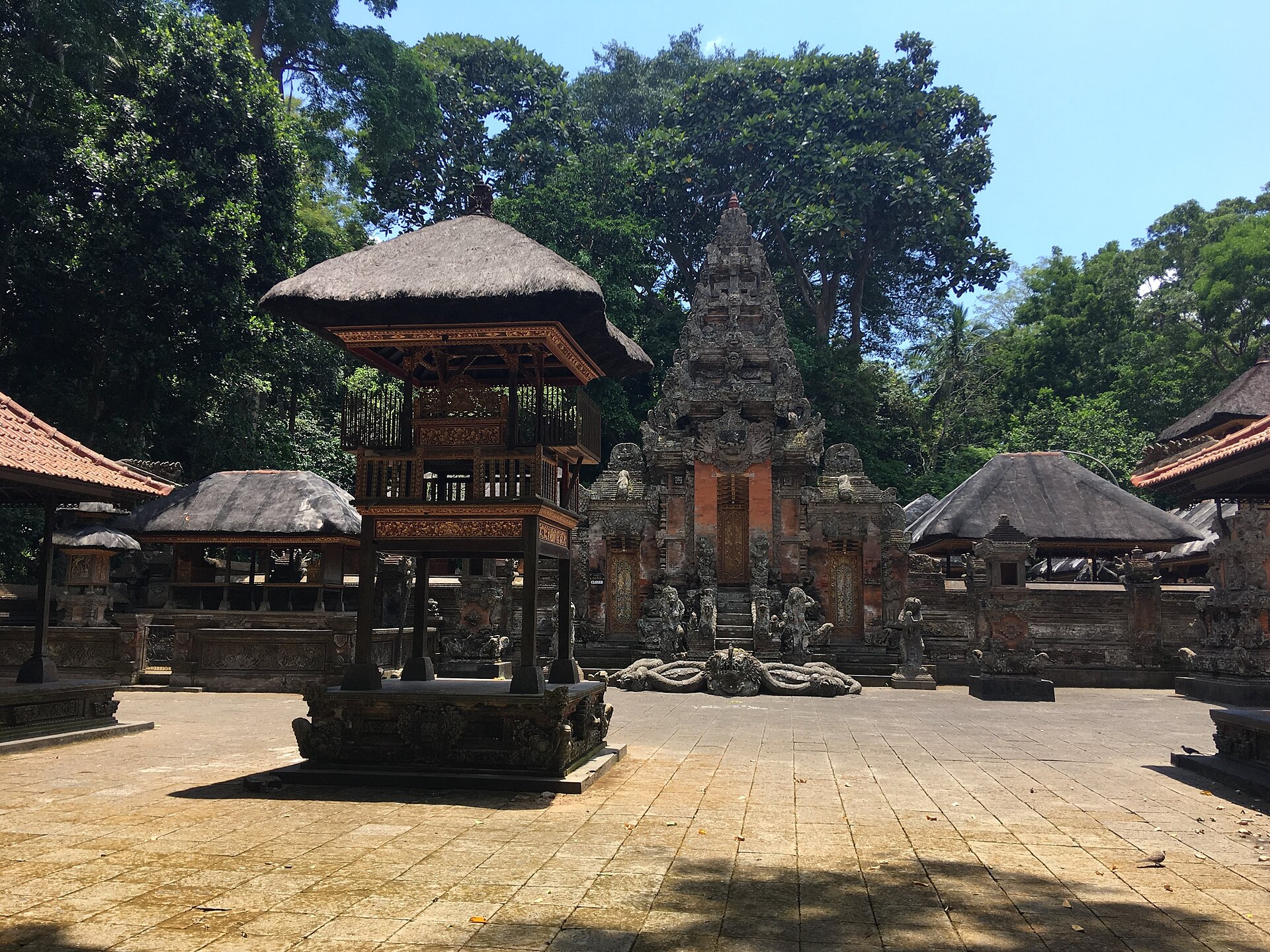
North of Ubud centre, past the last warung on Jalan Raya Ubud, a network of paths known locally as the Kajeng rice fields opens into paddies that see a fraction of the crowds at the famous terraces. The path is flat, unpaved, and shared with farmers. No entry fee. No donation request. No swing. You walk among the working fields, on the same level as the rice. The trade off is that Kajeng lacks the dramatic stepped geometry that makes the headliner photogenic. The terraces here are gentle slopes, not staircases. If your goal is to see the subak system in daily use, Kajeng is better. If your goal is the postcard, arrive at Tegallalang at 06:30.
Jatiluwih: The Full Day Commitment
Jatiluwih, roughly 90 minutes northwest of Ubud by private car, is a UNESCO recognised rice terrace landscape on a scale that dwarfs Tegallalang. The entry fee is higher (around 60,000 IDR). The drive takes longer. The reward is a walking circuit that takes two to three hours through terraces that extend across the hillside without interruption. The trade off: Jatiluwih is a day trip, not a morning outing. You burn three hours on the road. The roads are winding and slow. If you have fewer than four days in Ubud, skip Jatiluwih and walk Kajeng instead. If you have five days or more, Jatiluwih is the single best rice terrace experience in Bali, provided you hire a private driver (budget around 500,000 IDR for the round trip) and leave Ubud by 07:00.
Common Questions
Which Ubud rice terraces are worth visiting beyond Tegallalang?
Kajeng, a network of flat walking paths north of Ubud centre, offers working paddies with no entry fee and almost no crowds. Jatiluwih, a 90 minute drive away, offers a UNESCO listed landscape on a much larger scale but requires a full day trip. Both trade dramatic stepped geometry for a quieter, more genuine experience.
What does a real yoga and rice field morning in Ubud look like?
Start at 06:30 on the Campuhan Ridge Walk (free, two kilometres one way). Attend a 09:00 class at Yoga Barn or a smaller shala in Nyuh Kuning. Then walk north through the Kajeng rice fields before 11:00, when scooter traffic on Jalan Raya Ubud peaks. By 11:30 you should be off the main road.
When should I visit the rice terraces to avoid brown stubble?
The rice harvest cycle varies by field and season. Ask at your guesthouse for the current planting and harvest timeline for the specific terrace you plan to visit. A local can call a farmer. No single date works for all of Ubud.
Is it worth staying in Ubud if I am a digital nomad?
Yes, provided you book a guesthouse north of the Monkey Forest Road / Jalan Hanoman junction, where rice fields are a five minute walk away and café fibre internet is reliable. The trade off is thinner dining options and heavy traffic on Jalan Raya Ubud.
How does Ubud compare to Seminyak for a first time visitor?
Ubud is for rice terraces, yoga, and jungle scenery. Seminyak is for beach clubs, dining, and sunset bars on grey brown volcanic sand. The drive between them takes 60 to 120 minutes. Choose one as a base and take a single day trip to the other.
Read next
-
 Indonesia Which Island Which Season and How to Get Between Them
Bali, Lombok, the Gilis or Java: which island fits your trip, which season makes the logistics work, and what the crossings actually cost in rupiah and hours.
Indonesia Which Island Which Season and How to Get Between Them
Bali, Lombok, the Gilis or Java: which island fits your trip, which season makes the logistics work, and what the crossings actually cost in rupiah and hours.
-
 Bali Lombok the Gilis or Java a Straight Answer on Which Island
Bali has the infrastructure, Lombok the raw coast, the Gilis the parties or the silence, and Java the chaos. Which Indonesian island actually fits your trip.
Bali Lombok the Gilis or Java a Straight Answer on Which Island
Bali has the infrastructure, Lombok the raw coast, the Gilis the parties or the silence, and Java the chaos. Which Indonesian island actually fits your trip.
-
 Fast Boats Between Bali Lombok and the Gilis Times Cost and the Sea
Fast boats connect Bali, Lombok and the Gilis in 90 minutes on a calm day. Ticket prices in rupiah, departure ports, and the months when swell cancels everything.
Fast Boats Between Bali Lombok and the Gilis Times Cost and the Sea
Fast boats connect Bali, Lombok and the Gilis in 90 minutes on a calm day. Ticket prices in rupiah, departure ports, and the months when swell cancels everything.
-
 Best Time to Visit Indonesia Month by Month for Every Island
Month-by-month breakdown of Indonesia's seasons, crowds, and transport realities across Bali, Lombok, and the Gilis—so you pick the right window.
Best Time to Visit Indonesia Month by Month for Every Island
Month-by-month breakdown of Indonesia's seasons, crowds, and transport realities across Bali, Lombok, and the Gilis—so you pick the right window.
-
 When to Visit Thailand, Bali, and China on an Extended Asia Itinerary
How to sync Thailand, Bali, and China into one itinerary, plus which months make all three destinations work at the same time.
When to Visit Thailand, Bali, and China on an Extended Asia Itinerary
How to sync Thailand, Bali, and China into one itinerary, plus which months make all three destinations work at the same time.
-
 Getting to Indonesia's Eastern Islands Without Routing Through Bali
Skip the Bali default. Here's how to reach Flores, Komodo, and Raja Ampat through Makassar, Lombok, and Surabaya with real costs.
Getting to Indonesia's Eastern Islands Without Routing Through Bali
Skip the Bali default. Here's how to reach Flores, Komodo, and Raja Ampat through Makassar, Lombok, and Surabaya with real costs.
-
 Bali, Lombok, or Nusa Penida — Ferry Routes, Real Costs, and How to Decide
Compare ferry routes, crossing times, and real ticket prices for Bali, Lombok, and Nusa Penida — then match the right island to your trip length and goals.
Bali, Lombok, or Nusa Penida — Ferry Routes, Real Costs, and How to Decide
Compare ferry routes, crossing times, and real ticket prices for Bali, Lombok, and Nusa Penida — then match the right island to your trip length and goals.