Nusa Penida Roads and Reaching Kelingking Beach Without a Medical Evacuation
Nusa Penida's Instagram cliffs are real and so are the roads that can send you to a clinic. Here's how to reach Kelingking Beach and Broken Beach in a day without riding after dark.
- Flag
-

- ISO code
- ID
- Currency
- IDR
Nusa Penida Roads and Reaching Kelingking Beach Without a Medical Evacuation
What The Roads Actually Look Like
The first time you crest a ridge on Nusa Penida and see the T-Rex-shaped cliff of Kelingking Beach, the instinct is to gun the throttle to get closer. Then the asphalt vanishes. What replaces it is a surface that looks like it was bombed and then left to heal on its own: broken concrete, sharp-edged potholes the size of a motorcycle wheel, and gravel that shifts under your tyres without warning. The roads are the single most important decision factor on this island, not an afterthought to the Instagram shots.
These roads, particularly on the west coast between Kelingking Beach and Broken Beach, are paved but severely degraded, with single-lane width that forces you to negotiate blind corners against oncoming bikes and minivans driven by people who know every crater. The steep gradients near the cliff viewpoints are where most accidents happen. A medical evacuation from Nusa Penida to mainland Bali requires a boat crossing back to Sanur Harbour, then a road transfer to a hospital in Denpasar or Seminyak. Count on three to four hours minimum from the moment of a serious crash to reaching emergency care. That timeline is the reason you should treat the rental decision with the same seriousness as a pre-trip visa application.
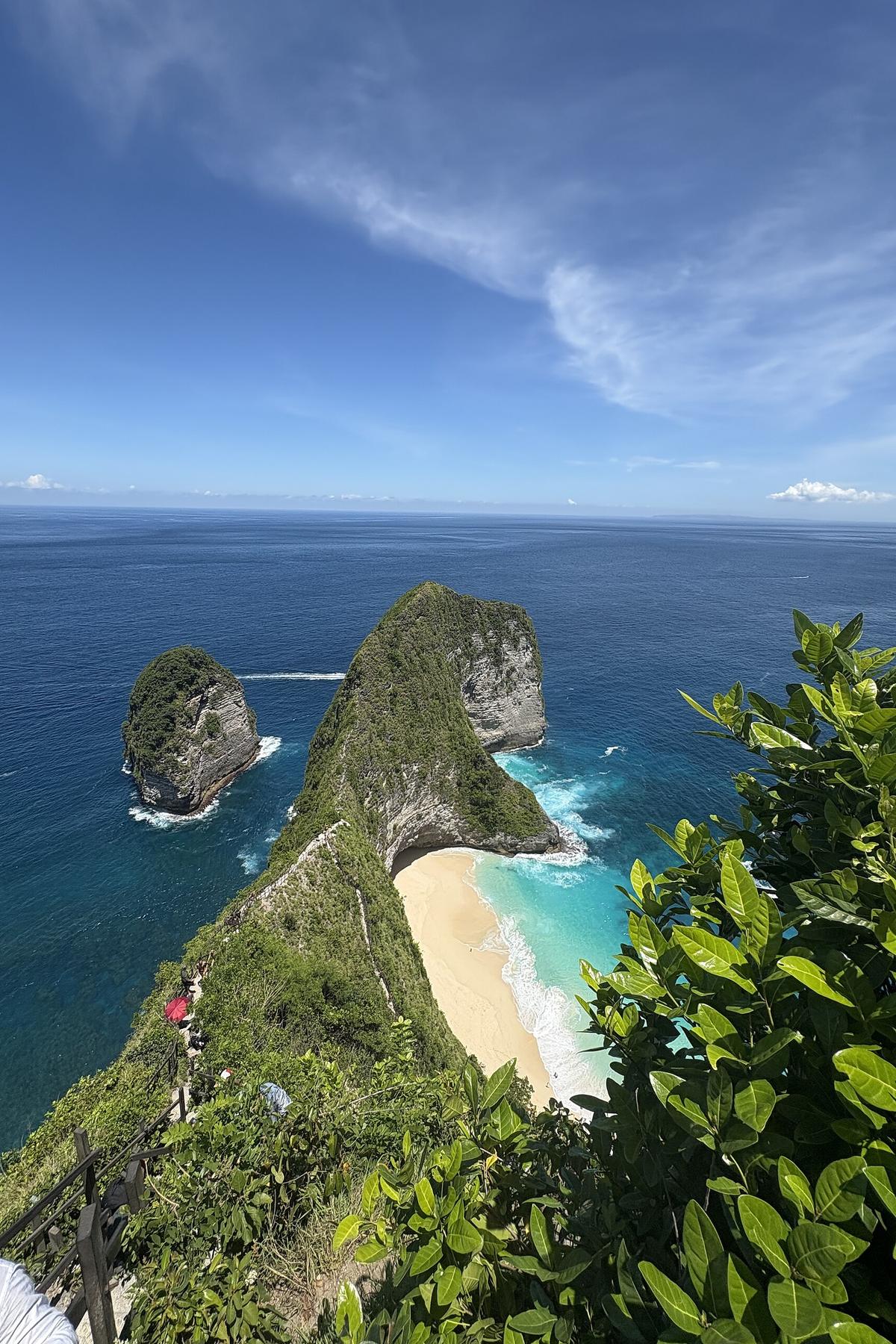
_of_Nusa_Penida,_Bali_(2025)_-_img_02.jpg)
Kelingking Beach Descent
The Staircase
Kelingking Beach sits at the base of a 150-metre cliff on the west coast. The viewpoint at the top gives you the classic T-Rex photo, but the beach itself requires a descent of over 400 steps on steep concrete and bamboo stairs that take 30 to 45 minutes down and longer on the return. The stairway is narrow, uneven, and lacks guardrails on several sections. One misplaced foot on the damp steps in the morning dew and you are looking at an injury that turns your day trip into a medical evacuation scenario.
The Beach And The Return
Once you reach the bottom, the beach is white sand but coarse-grained, with a strong shore break and dangerous rip currents. No lifeguards patrol here, and swimming is actively advised against by every local guide and the regency's safety notices. The reward is a patch of sand that is genuinely empty if you arrive early, but the climb back up in the midday heat will test your fitness more than any other single activity on Nusa Penida. Carry at least two litres of water per person and start the descent by 09:00 if you plan to return to the top before noon.
Nusa Penida Day Trip
The Tight Schedule From Sanur
A single day trip from Sanur to Nusa Penida is feasible but rushed and requires strict timing. The first fast boats depart Sanur Beach Harbour around 07:00 to 07:30 WITA, and the last boat back from Banjar Nyuh Harbour (also called Sampalan Harbour) leaves Nusa Penida at roughly 16:00 to 16:30. That gives you five to six hours on the island at most, which covers two to three west coast sites if you move without delays.
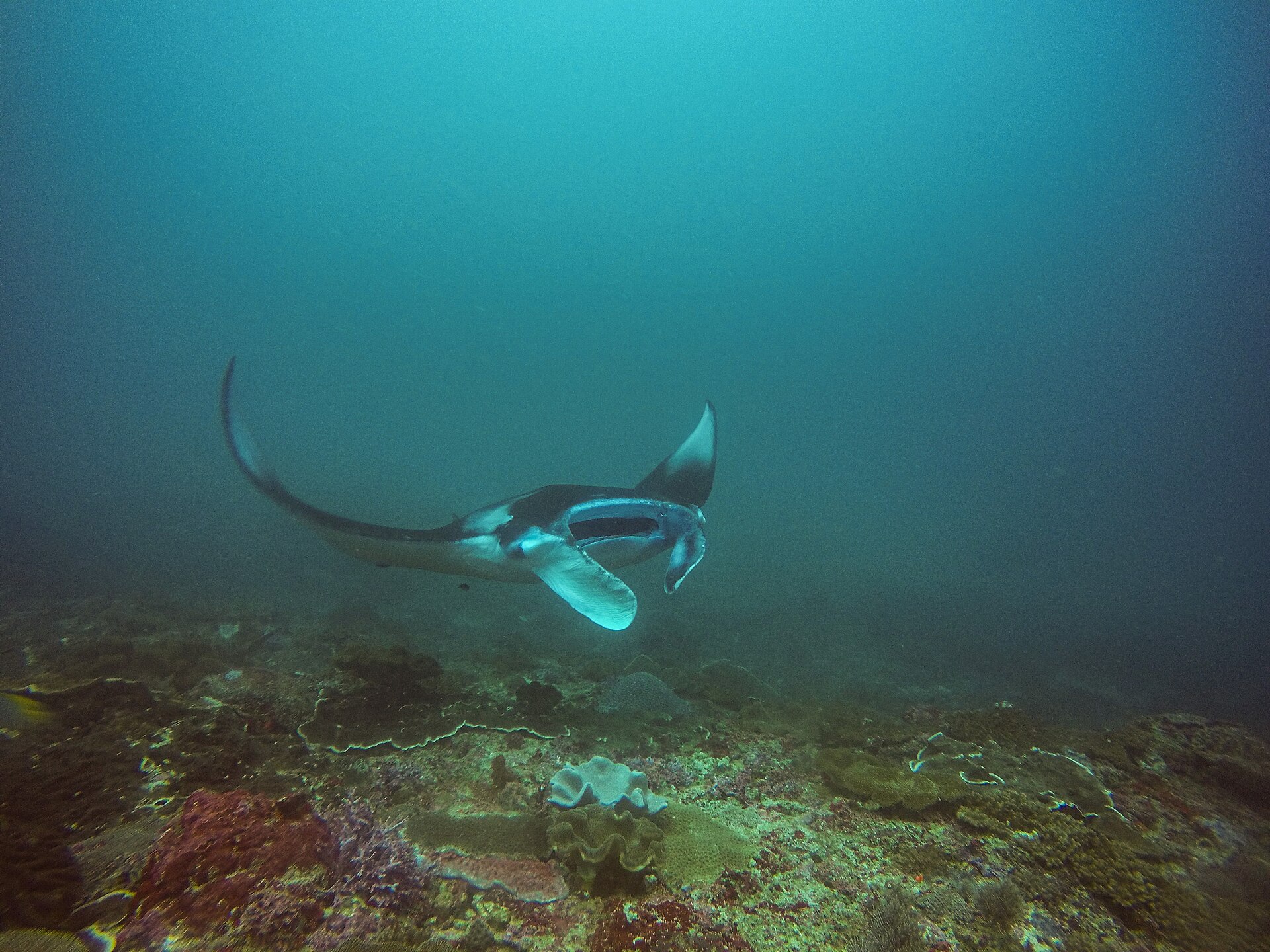
The sequence that works: arrive at the harbour by 08:00, ride directly to Kelingking Beach, descend and ascend the staircase before 11:00, then continue southwest to Broken Beach and Angel's Billabong, which are adjacent to each other and share a parking area. Photograph each site, eat a warung lunch near the Broken Beach entrance, and start the ride back to the harbour by 14:30 to account for the degraded road surface and any mechanical issues with your bike. You will miss any east coast sites like Diamond Beach or Atuh Beach entirely on this schedule. You will also miss the Manta Point and Crystal Bay dive sites, which require a boat charter and a full morning.
Nusa Penida Scooter Rental
Permits, Inspections, And The Fuel Gauge Photo
Rental on Nusa Penida runs between IDR 70,000 and 100,000 per day, and the legal requirement is an International Driving Permit endorsed for motorcycles. Police checkpoints on the island do exist, particularly near Sampalan and the west coast junctions, and the fine for riding without the correct endorsement is a bargaining session on the roadside. More important than the permit is the pre-rental inspection. Photograph every panel of the bike and the fuel gauge in the presence of the owner at pickup. This is the fuel gauge photo protocol that protects you from the common rental scam where owners demand cash for pre-existing damage upon return.
The accident rate on Nusa Penida is high among foreign visitors, and the fatality locations are concentrated on steep descents near Kelingking and unpaved sections near Diamond Beach. An alternative exists: a private car with driver costs IDR 500,000 to 700,000 per day, carries three to four passengers, and eliminates the road risk entirely. If you are not a confident daily rider on Southeast Asian roads, do not start on Nusa Penida. The island is not a training ground.
Broken Beach Nusa Penida
Pasih Uug And The Viewpoint
Broken Beach, known locally as Pasih Uug, is a collapsed sea cave that forms a natural arch opening into a circular cove. It sits on the southwest coast adjacent to Angel's Billabong, and access is limited to the viewpoint looking down from the cliff edge. There is no beach access and no swimming. The walkway along the rim is safe in dry conditions, but the rock surface is uneven and the drop is direct into the cove below. Visit between 09:00 and 10:30, before the tour vans arrive from the harbour, and expect to spend no more than 20 minutes at the viewpoint.
Angel's Billabong And The Wave Risk
Angel's Billabong is the natural rock pool next door, accessible only at low tide. A tide chart is essential; at high tide the feature is submerged and invisible. The injury risk here is not from the staircase but from rogue waves: swells washing over the rock shelf have swept visitors off the rocks into the sea, with multiple fatalities recorded. Do not position yourself near the outer edge of the pool. Sit well back from the wave break and watch the sea state for a few minutes before stepping onto the wet rock. The entry fee for the island retribution levy is IDR 25,000 per person, collected at the harbour or at individual attractions, and is the same for Broken Beach and Angel's Billabong.
| Site | Time Allotment | Key Constraint |
|---|---|---|
| Kelingking Beach | 2.5 hours (descent, beach, ascent) | Start descent by 08:30, finish ascent before noon |
| Broken Beach | 20–30 minutes | Viewpoint only, no beach access |
| Angel's Billabong | 30 minutes | Low tide only, check tide chart before arrival |
| Return ride to Sampalan | 45–60 minutes | Account for potholes, steep gradients, sharp bends |

Telkomsel Coverage and the Blackout Zones
Where Signal Lives And Dies
Mobile signal on Nusa Penida is patchy on the south and east coasts. A Telkomsel tourist SIM, which you should buy from an official shop on Bali rather than the airport to avoid overpriced data-thin packages, works reliably in Sampalan and along the main west coast route to Kelingking. The blackout zones are the approach roads to Diamond Beach and the eastern cliffs, where signal drops entirely for stretches of three to five kilometres. Offline Google Maps downloaded before you leave Bali is not optional: the ferry piers are poorly signposted, and the road network on the island has branches that dead-end at private property.
Download the maps for the entire Nusa Penida area while you are still on a stable Telkomsel or hotel Wi-Fi connection in Sanur or Seminyak. The offline maps will show the main route from the harbour to the west coast, but they will not show the potholes or the gradient changes. Those you navigate through reduced speed and an awareness that the next bike coming around a blind bend may be straddling your lane because the road is too broken to stay on their side.
Rough Sea Months and the Ferry Reality
The Crossing
The crossing from Sanur to Nusa Penida takes 30 to 50 minutes on a fast boat, with one-way tickets costing between IDR 150,000 and 300,000. Operators include Maruti Express, Crown Fast Cruises, Semabu Hills Fast Boat, and Angel Billabong Fast Cruise. The rough sea months are July to August and December to February, when waves reach 1.5 to 3.0 metres and crossings frequently cancel. A public ferry alternative runs from Padang Bai to Nusa Penida, taking 60 to 90 minutes and capable of carrying vehicles, but it is slower and runs on a less frequent schedule.
If you are considering a day trip during these months, book a fast boat with a flexible cancellation policy and have a backup plan for the day. Verify the current ticket price with the harbour ticket office in Sanur on the morning of your departure. Pack a dry bag for electronics and documents, because fast boats on rough seas can soak luggage stored in the bow compartments.
What This Island is Bad at
Who Should Stay Away
Nusa Penida is bad at accommodating inexperienced riders, families with young children, travellers with mobility limitations, and anyone seeking a calm swimming beach. The few safe swimming beaches are Crystal Bay, which is relatively calm, Atuh Beach on the east coast with moderate conditions, and Diamond Beach, which has a strong shore break. The rest of the coastline is coarse sand, strong currents, and cliff-bound access. The island's electricity reliability is poor, with frequent outages that accommodation properties cover with generators. ATMs are few and often empty: bring more cash than you think you need, because card acceptance is limited to the high-end villas and a few warungs near Sampalan.
The Overnight Advantage
An overnight stay on Nusa Penida changes the equation entirely. It gives you access to Manta Point morning dives, east coast sites at sunrise, and the west coast viewpoints before the day-trip crowds arrive at 10:00. Low-end homestays with fan rooms start at IDR 150,000 to 300,000 per night, while beachfront villas with pools and air conditioning run IDR 1,500,000 to 4,000,000. The trade-off is the same degraded road network for every trip you make, but at least you are not racing the last boat back to Sanur.
Common Questions
How bad are the roads on Nusa Penida compared to Bali mainland?
Worse. Nusa Penida roads are mostly paved but severely degraded, with potholes, single-lane width, steep gradients, and sharp bends. Bali's main roads are smooth in comparison. The west coast near Kelingking and Broken Beach is the most deteriorated section, and the east coast is marginally better but still potholed.
Can I reach Kelingking Beach, Broken Beach, and Angel's Billabong in one day from Sanur?
Yes, if you take the first fast boat at 07:00, ride directly to Kelingking first, then Broken Beach and Angel's Billabong, and return to Sampalan by 14:30 for the last boat at 16:00. You will miss east coast sites and any diving. The sequence is tight and the roads add unpredictability.
Do I need an International Driving Permit for a scooter on Nusa Penida?
Yes. An International Driving Permit endorsed for motorcycles is legally required. Police checkpoints exist near Sampalan and west coast junctions. Riding without one risks a fine and invalidates any travel insurance claim if you crash. The accident rate on Nusa Penida is high among visitors.
Is there mobile phone reception on the road to Kelingking Beach?
Telkomsel works on the main west coast route to Kelingking and in Sampalan. Signal drops on the south and east coasts, especially near Diamond Beach. Download offline Google Maps for all of Nusa Penida before you leave Bali. The ferry piers are poorly signposted and the road network branches into dead ends.
Read next
-
 Indonesia Which Island Which Season and How to Get Between Them
Bali, Lombok, the Gilis or Java: which island fits your trip, which season makes the logistics work, and what the crossings actually cost in rupiah and hours.
Indonesia Which Island Which Season and How to Get Between Them
Bali, Lombok, the Gilis or Java: which island fits your trip, which season makes the logistics work, and what the crossings actually cost in rupiah and hours.
-
 Bali Lombok the Gilis or Java a Straight Answer on Which Island
Bali has the infrastructure, Lombok the raw coast, the Gilis the parties or the silence, and Java the chaos. Which Indonesian island actually fits your trip.
Bali Lombok the Gilis or Java a Straight Answer on Which Island
Bali has the infrastructure, Lombok the raw coast, the Gilis the parties or the silence, and Java the chaos. Which Indonesian island actually fits your trip.
-
 Fast Boats Between Bali Lombok and the Gilis Times Cost and the Sea
Fast boats connect Bali, Lombok and the Gilis in 90 minutes on a calm day. Ticket prices in rupiah, departure ports, and the months when swell cancels everything.
Fast Boats Between Bali Lombok and the Gilis Times Cost and the Sea
Fast boats connect Bali, Lombok and the Gilis in 90 minutes on a calm day. Ticket prices in rupiah, departure ports, and the months when swell cancels everything.
-
 Best Time to Visit Indonesia Month by Month for Every Island
Month-by-month breakdown of Indonesia's seasons, crowds, and transport realities across Bali, Lombok, and the Gilis—so you pick the right window.
Best Time to Visit Indonesia Month by Month for Every Island
Month-by-month breakdown of Indonesia's seasons, crowds, and transport realities across Bali, Lombok, and the Gilis—so you pick the right window.
-
 Bali, Lombok, or Nusa Penida — Ferry Routes, Real Costs, and How to Decide
Compare ferry routes, crossing times, and real ticket prices for Bali, Lombok, and Nusa Penida — then match the right island to your trip length and goals.
Bali, Lombok, or Nusa Penida — Ferry Routes, Real Costs, and How to Decide
Compare ferry routes, crossing times, and real ticket prices for Bali, Lombok, and Nusa Penida — then match the right island to your trip length and goals.
-
 Getting to Indonesia's Eastern Islands Without Routing Through Bali
Skip the Bali default. Here's how to reach Flores, Komodo, and Raja Ampat through Makassar, Lombok, and Surabaya with real costs.
Getting to Indonesia's Eastern Islands Without Routing Through Bali
Skip the Bali default. Here's how to reach Flores, Komodo, and Raja Ampat through Makassar, Lombok, and Surabaya with real costs.