Jakarta: The Airport You Connect Through, and What a Day in the Capital Is Worth
Jakarta is the airport most travellers connect through and few explore. What a day in the capital costs in rupiah and minutes, and when the air quality says stay inside.
- Flag
-

- ISO code
- ID
- Currency
- IDR
Jakarta: the Airport You Connect Through, and What a Day in the Capital is Worth
Most travellers treat Soekarno Hatta airport as an obstacle to endure. You land at CGK, track the departures screen, and count the hours until your flight to Bali or Lombok. The assumption is that Jakarta is too polluted, too congested, and too difficult to bother with for a single day. That assumption is wrong for about half of the layover windows that pass through this hub. Deciding whether a Jakarta connection day is worth taking depends on your gap between flights, the season, and your tolerance for risk. A six-hour domestic-to-domestic connection is not enough. An eight-hour international-to-domestic gap is the minimum. With ten hours and a dry-season date, you can visit two of Southeast Asia's most significant sites, eat a dish that exists nowhere else, and return to the terminal with an hour to spare.
Jakarta Layover Guide: the Only Scenario Where You Leave the Airport
The decision to exit CGK is binary, and the threshold is precise. If your itinerary shows six hours or less between flights, stay airside. Book a room at the Anara Airport Hotel in Terminal 3 or the Jakarta Airport Hotel in Terminal 2E. Sleep, shower, and do not attempt the road. An eight-hour gap gives you a narrow window that works only in the dry season. Any gap longer than ten hours is a green light for a city dash, provided you are not travelling in the rainy season. November through March, flooding can add up to three hours to any road journey, which turns a manageable connection into a missed flight.
The airport rail link is your only reliable option. Called KA Bandara Soekarno Hatta, it runs from SHIA station to BNI City station in the Sudirman financial district. Journey time is 46 to 55 minutes. Trains depart every half hour. The fare is IDR 50,000, a price that may have shifted by the time you fly, so check the operator's published rates before you travel. Operating hours run roughly 04:30 to 00:30, which covers all but the red-eye departures. The train bypasses the congestion corridor that makes Jakarta's roads a gamble. A direct taxi from CGK to the Monas area can take 40 minutes with a clear road or two hours during peak periods. The train plus a short walk is consistent.
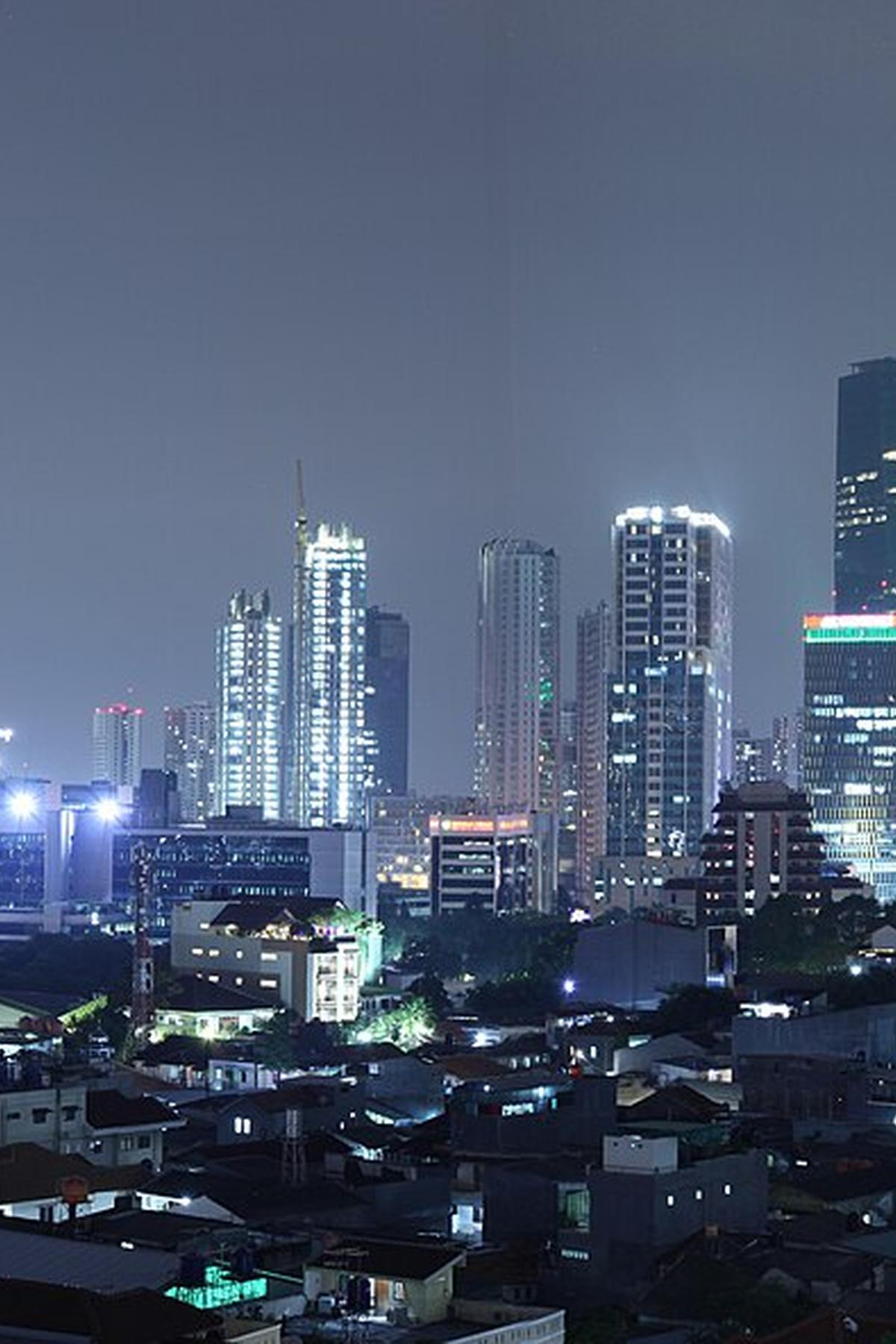

CGK to Jakarta City: Train and Taxi Strategy
From BNI City station, you have two choices depending on what you want to see first. If Monas is your target, walk. It takes 15 to 20 minutes north along Jalan Medan Merdeka Selatan. This is the safest route in the city: wide pavements, visible security, and no need to negotiate a fare. If you are heading to Kota Tua, the Dutch colonial old town, take a taxi or a Gojek. The trip is 20 to 40 minutes depending on the time of day. Avoid this journey between 16:30 and 20:00 on weekdays, when the roads lock solid.
Door to door: a taxi from CGK to Kota Tua takes 45 minutes with a clear road and up to two and a half hours during peak. The train-plus-taxi combination takes 70 minutes with no congestion and roughly two hours during peak. The train wins on cost and consistency. The taxi wins on zero transfers. For a short connection, take the train. For anything longer than 12 hours, a direct taxi is acceptable because you have the time to absorb the delay.
What To Do Between Arrival And The Monas Walk
Buy your return train ticket at SHIA station before boarding. The BNI City station machines sometimes sell out of paper tickets during busy periods. You want the round-trip fare, which comes to IDR 100,000 total. Carry smaller bills; the change machines reject large notes. You will also need the Gojek app installed with a working Indonesian SIM. Telkomsel is the most reliable carrier. Buy it at the airport to avoid locked tourist packages.
Things to Do in Jakarta One Day: the Eight Hour Route
Start at Monas. Monumen Nasional stands 132 metres tall, and its observation deck at 115 metres gives you a full panorama of Jakarta Pusat. Arrive by 08:30. The ticket queue builds fast and the heat becomes punishing after 10:00. From the deck, you see the districts that define Jakarta's geography: the government towers of Jakarta Pusat around you, the affluence of Jakarta Selatan to the south, and the old port area of Jakarta Utara. The experience takes 45 minutes. Budget IDR 50,000 for the entry and lift ticket.
Walk from Monas to Istiqlal Mosque. It is Southeast Asia's largest mosque, and it sits directly across from the Jakarta Cathedral on Jalan Medan Merdeka Timur. You can cover the grounds in 20 minutes. Non-Muslim visitors are welcome outside prayer times. Dress appropriately: long trousers and covered shoulders for men, head covering and long sleeves for women. Scarves are available at the entrance.
From Istiqlal, take a Gojek to Kota Tua. The ride costs about IDR 30,000 and takes 15 minutes if you avoid the midday crush. Kota Tua is the Dutch colonial old town from the 17th and 18th centuries. The square at Taman Fatahillah is the centre, surrounded by the Jakarta History Museum and the Fine Arts Museum. The National Museum, Museum Nasional Indonesia, was closed for renovation until at least late 2026, so the Kota Tua museums are your best option for colonial history. Check the status before you go; the closure may extend.
Lunch Strategy For A Layover
Walk north from Kota Tua into Glodok, Jakarta's Chinatown. The street food here is the reason to leave the airport. Order soto Betawi from a warung on Jalan Pancoran. This is Jakarta's beef soup with coconut milk, tomato, and offal, served with rice cakes. A bowl costs IDR 30,000 to IDR 50,000. Follow it with kerak telor, the sticky omelette of glutinous rice, egg, and shredded coconut, cooked over charcoal on a street cart. Kerak telor is vanishing from Jakarta's food stalls. Finding it in Glodok is a small win. Pay IDR 20,000.
The Air Quality Reality You Cannot Ignore
Jakarta air pollution is not a background concern. It is a hazard. The dry season from June to September pushes readings into hazardous levels. The AQI routinely exceeds 150. If you have asthma, a respiratory condition, or are travelling with children, do not leave the airport during these months. The airport is air conditioned and filtered. The city is not. For healthy adults, the risk is manageable for eight hours. Wear an N95 mask for any time spent on the street. The dust and particulate matter from the traffic corridor settle into your lungs within 15 minutes of exposure. This is not alarmism. It is the seasonal condition of a city on a floodplain with millions of cars and no continuous monsoon flush.
Soekarno Hatta Airport Transfer: the Return Windows You Must Respect
The return transfer from the city back to CGK demands the same discipline as the exit. If you are on the train, the last departure from BNI City to the airport is timed against the final operating hour of the rail link. The service runs until roughly 00:30, but the last train from BNI City leaves around 23:30. Buy your return ticket when you arrive at BNI City in the morning so you have a confirmed slot.
If you take a taxi back, the 45-minute journey morphs into two hours during the evening peak. The standard rule: depart from central Jakarta four hours before your flight's boarding time. For international departures, add another 30 minutes for immigration and security at CGK Terminal 3.
When The Rail Link Cannot Save You
Rainy-season flooding in Jakarta is not a theoretical risk. A 30-minute downpour on Jalan Gatot Subroto during November can make the airport train the only moving vehicle in the city. Even the rail link can be affected if the tracks flood near Manggarai. In those conditions, your connection window collapses. The only safe play is to stay at an airport-area hotel in Tangerang. Budget IDR 350,000 to IDR 600,000 for a low-end room. That is cheaper than the missed-connection fee and the stress.
Jakarta Air Pollution: the Honest Health Warning for a Single Day
The question is not whether Jakarta has bad air. The question is whether eight hours of exposure during a layover is safe. For a healthy adult in the dry season, the answer is yes, with precautions. The hazardous air is worst between 06:00 and 10:00, when the traffic corridor builds its daily inversion layer. Monas sits in the middle of that corridor. If you visit at 08:30, you are breathing the peak. Wear a mask. Spend no more than 90 minutes at street level before retreating into air-conditioned museums or the train.
For travellers with any respiratory sensitivity, the single day is not worth the experiment. The National Museum extension in Gambir is air conditioned, but the route between BNI City and Monas passes through open traffic. Jakarta's air does not improve after 15:00. The late-afternoon peak traps pollutants in the same corridor. Plan your indoor activities for 11:00 to 14:00, which offers slightly better dispersion.
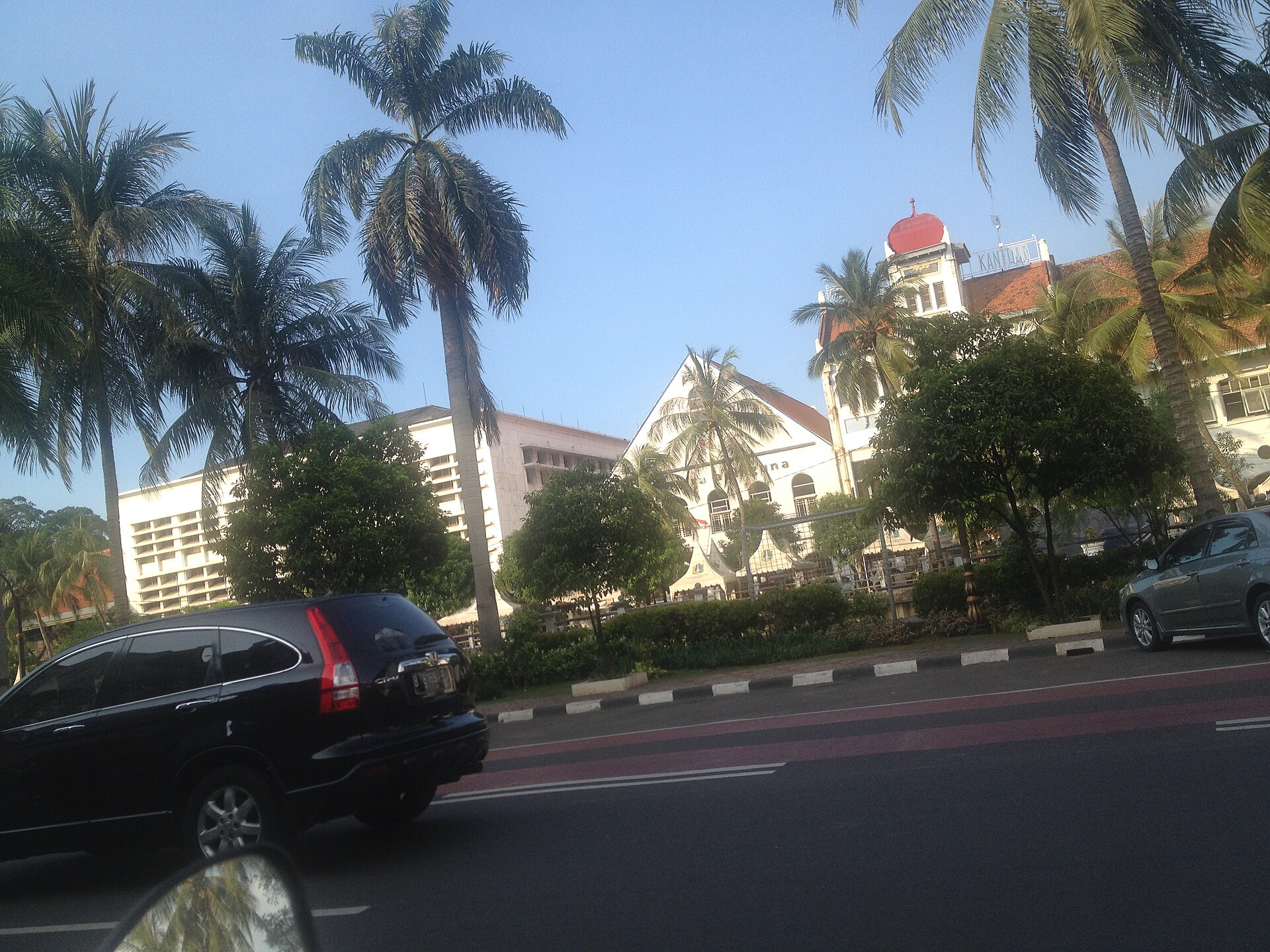

Where to Sleep and Who Should Skip the City Dash
If your layover is overnight, you have two sleeping strategies. For early flights, stay in an airport-area hotel in Tangerang. Mid-range options run IDR 700,000 to IDR 1,200,000 per night. You trade a view for a 15-minute shuttle to the terminal. For anyone who wants to see something, stay in central Jakarta around Thamrin, Sudirman, Menteng, or the Kota Tua area. Low-end central hotels run IDR 250,000 to IDR 500,000 per night. Mid-range is IDR 800,000 to IDR 1,800,000. High-end goes to IDR 6,000,000. The premium for being near Monas is worth it if you have only ten hours. The walking access eliminates the traffic corridor altogether.
This day in Jakarta suits history and street-food-focused travellers who have eight or more hours to spare in the dry season. It suits first-time Indonesia visitors who want a single-day capital snapshot before heading to Bali or Lombok. It does not suit beach or nature seekers. It does not suit anyone with mobility constraints. It does not suit anyone intolerant of heat, humidity, and noise. And it does not suit anyone who cannot handle the daily reality of Jakarta air pollution. If you are in any of those groups, stay at the Anara, sleep, and meet Jakarta on a future trip with more time.
| Route | Time (No Traffic) | Time (Peak) | Cost (IDR) |
|---|---|---|---|
| CGK to Monas by taxi | 40 min | 2 hours | 200,000 to 350,000 |
| CGK to Monas by train and walk | 65 to 80 min | 80 to 100 min | 50,000 |
| CGK to Kota Tua by taxi | 45 min | 2.5 hours | 250,000 to 400,000 |
| CGK to Kota Tua by train and taxi | 70 min | 2 hours | 80,000 |
| BNI City to Monas on foot | 15 to 20 min | No change | 0 |
Common Questions
Can I leave Soekarno Hatta airport during a 6 hour layover?
No. The minimum layover to leave the airport safely is 8 hours for international to domestic connections. A 6 hour domestic to domestic gap is not enough to clear the airport rail link, visit a site, and return without risking your next flight.
How much does the airport train from CGK to central Jakarta cost?
The KA Bandara Soekarno Hatta fare is IDR 50,000. The operator publishes revised rates annually, so confirm the price before travelling. The journey from SHIA station to BNI City station takes 46 to 55 minutes.
Is it safe to walk from Monas to the Kota Tua area?
No. The walk from Monas to Kota Tua covers 3 kilometres through traffic-heavy streets. Take a Gojek or a taxi. The ride costs about IDR 30,000 and takes 15 minutes outside peak hours.
What happens to Jakarta layovers during the rainy season?
Rainy season flooding from November to March can add 1 to 3 hours to any road journey. If your layover is under 10 hours during these months, do not leave the airport. The rail link may also be affected by track flooding near Manggarai.
Where can I eat kerak telor in Jakarta during a layover?
Glodok, Jakarta's Chinatown, is the most reliable place to find kerak telor street carts. The dish is a sticky omelette of glutinous rice, egg, and shredded coconut. Pay about IDR 20,000. The best stalls are on Jalan Pancoran near the Petak Sembilan market.
Read next
-
 Indonesia Which Island Which Season and How to Get Between Them
Bali, Lombok, the Gilis or Java: which island fits your trip, which season makes the logistics work, and what the crossings actually cost in rupiah and hours.
Indonesia Which Island Which Season and How to Get Between Them
Bali, Lombok, the Gilis or Java: which island fits your trip, which season makes the logistics work, and what the crossings actually cost in rupiah and hours.
-
 Bali Lombok the Gilis or Java a Straight Answer on Which Island
Bali has the infrastructure, Lombok the raw coast, the Gilis the parties or the silence, and Java the chaos. Which Indonesian island actually fits your trip.
Bali Lombok the Gilis or Java a Straight Answer on Which Island
Bali has the infrastructure, Lombok the raw coast, the Gilis the parties or the silence, and Java the chaos. Which Indonesian island actually fits your trip.
-
 Fast Boats Between Bali Lombok and the Gilis Times Cost and the Sea
Fast boats connect Bali, Lombok and the Gilis in 90 minutes on a calm day. Ticket prices in rupiah, departure ports, and the months when swell cancels everything.
Fast Boats Between Bali Lombok and the Gilis Times Cost and the Sea
Fast boats connect Bali, Lombok and the Gilis in 90 minutes on a calm day. Ticket prices in rupiah, departure ports, and the months when swell cancels everything.
-
 Best Time to Visit Indonesia Month by Month for Every Island
Month-by-month breakdown of Indonesia's seasons, crowds, and transport realities across Bali, Lombok, and the Gilis—so you pick the right window.
Best Time to Visit Indonesia Month by Month for Every Island
Month-by-month breakdown of Indonesia's seasons, crowds, and transport realities across Bali, Lombok, and the Gilis—so you pick the right window.
-
 When to Visit Thailand, Bali, and China on an Extended Asia Itinerary
How to sync Thailand, Bali, and China into one itinerary, plus which months make all three destinations work at the same time.
When to Visit Thailand, Bali, and China on an Extended Asia Itinerary
How to sync Thailand, Bali, and China into one itinerary, plus which months make all three destinations work at the same time.
-
 Getting to Indonesia's Eastern Islands Without Routing Through Bali
Skip the Bali default. Here's how to reach Flores, Komodo, and Raja Ampat through Makassar, Lombok, and Surabaya with real costs.
Getting to Indonesia's Eastern Islands Without Routing Through Bali
Skip the Bali default. Here's how to reach Flores, Komodo, and Raja Ampat through Makassar, Lombok, and Surabaya with real costs.
-
 Bali, Lombok, or Nusa Penida — Ferry Routes, Real Costs, and How to Decide
Compare ferry routes, crossing times, and real ticket prices for Bali, Lombok, and Nusa Penida — then match the right island to your trip length and goals.
Bali, Lombok, or Nusa Penida — Ferry Routes, Real Costs, and How to Decide
Compare ferry routes, crossing times, and real ticket prices for Bali, Lombok, and Nusa Penida — then match the right island to your trip length and goals.