Railay Beach Krabi With No Road In and Limestone Walls on Three Sides
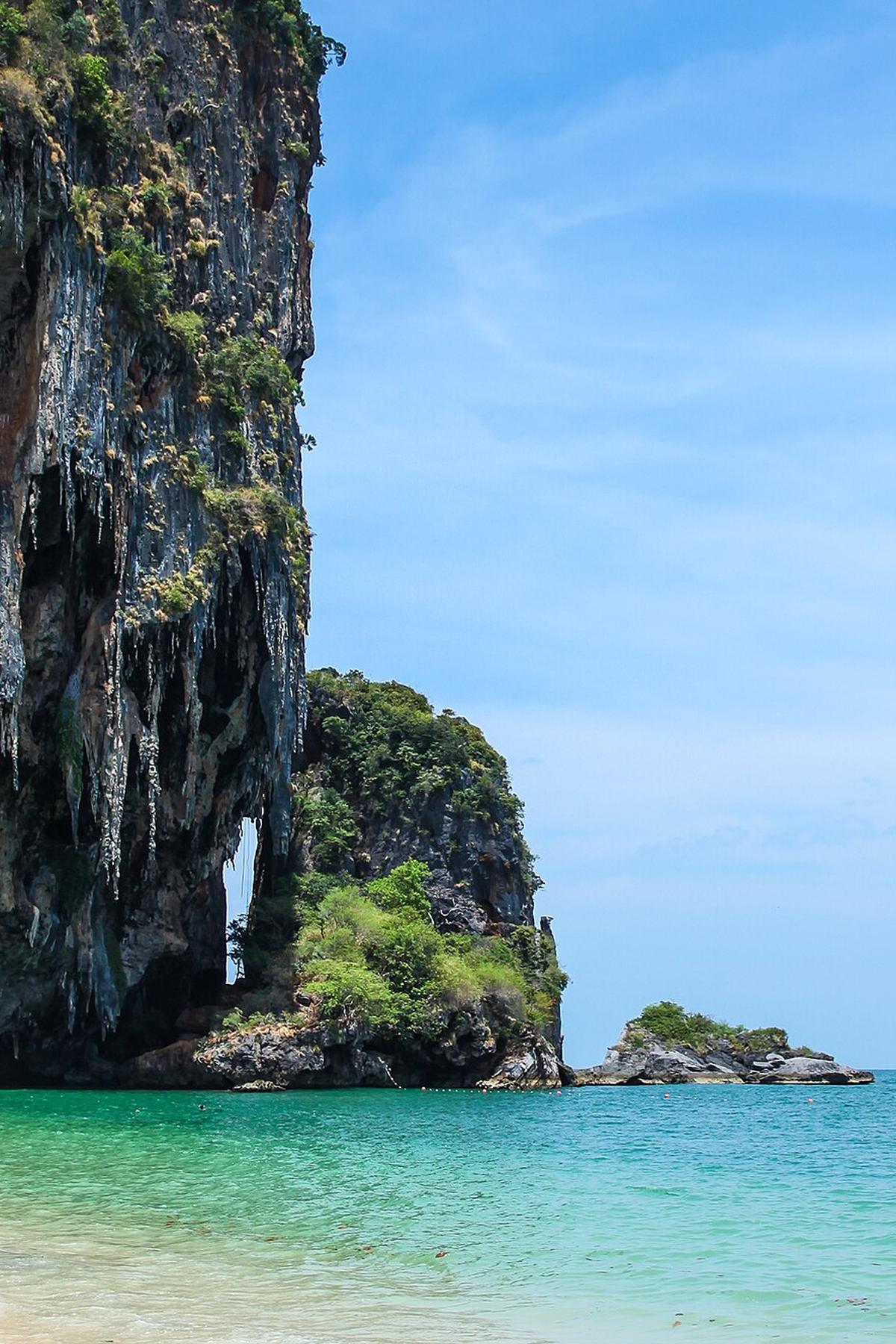
Railay Beach has no road in, limestone walls on three sides, and a long-tail boat as the only way to reach the sand and climbing crags.
- Flag
-

- ISO code
- TH
- Currency
- THB
Railay Beach Krabi, Where the Road Ends
You book a room, you pack a bag, and then you realise: there is no way to drive there. Railay Beach Krabi sits pinned between limestone walls and the Andaman Sea, and the only connection to the mainland is a long tail boat. That changes everything about how you arrive, what you pack, and what you expect from a beach holiday. What follows tells you what the headland actually feels like once the daily crowds from Ao Nang head back to their hotels, and whether the no road access makes it a sanctuary or a logistical headache.
The Boat is Your Only Road
Leave your scooter at the pier. Railay has no cars, no taxis, no motorbike rentals. Everything and everyone arrives by long tail boat. The most common access point is Ao Nang pier, a 10 to 15 minute ride across the water that costs around 100 to 200 THB per person each way depending on the time of day and how many passengers the boat carries. The journey is short enough that standing room works fine, but the boat floor collects spray and sand, so seal your electronics in a dry bag before you board.
From Krabi Town, the ride from Klong Jilad pier takes 30 to 45 minutes, useful if you arrive at the airport and want to head straight to Railay without overnighting in Ao Nang. Official boat hours from Ao Nang run 08:00 to 18:00, though unofficial night boats operate until about 22:00 or 23:00 depending on demand and tide. From Krabi Town, the last boat leaves around 17:30. If you arrive after dark, expect to wade ashore through shallow water onto sand; there is no pier lighting and no porter to carry your bag.
The Tide Does Not Care About Your Schedule
At low tide, a long tail boat arriving at Railay East stops 50 to 200 metres from the shore. You step off the bow into ankle to knee deep mud and walk the rest of the way. Sandals that can get wet are not optional. At extreme low tide, the entire bay becomes an exposed mudflat and long tails cannot approach at all, stranding arrivals and departures for one to three hours. Check the tide table for Krabi before you book any ferry connection to the mainland. The morning boat out of Railay East that requires an 08:00 departure may be impossible at spring low tide.
Monsoon Changes the Route
Between May and October, the southwest monsoon brings rough seas to the Andaman coast. Boats from Ao Nang depart from Ao Nam Mao, a 15 minute songthaew ride out of town, rather than from the main Ao Nang pier. Krabi Town boats may be suspended entirely during storms. Ferry safety on Thailand's Andaman route is inconsistent and speedboats in rough seas are genuinely dangerous. If you are travelling in low season, budget an extra day of slack in your itinerary for cancellations. Luggage gets soaked in transit regularly; waterproof bags are not precautionary, they are essential.

Where to Stay on Railay Beach Krabi
Accommodation on Railay divides cleanly by beach. The choices are walk in only, and you carry your own bag from the boat, so where you book determines how far you drag a suitcase through sand.
Railay West: The Swimmable Crescent
Railay West holds the 600 metre crescent of fine white sand with shallow, clear water that is swimmable at all tides. This is where you find mid range to high end resorts: air con bungalows and resort rooms starting around 2,000 to 5,000 THB a night in peak season, and pool villas at Rayavadee or Bhu Nga Thani that run 8,000 to 25,000 THB. The beach is quiet after sunset, and the boats stop running around 18:00, which means the sand empties fast once the day trippers leave.
Railay East: Budget Base with a Catch
Railay East is the budget spine: mangrove fringed mudflat on the water side, lined with guesthouses, bars, and the two to three ATMs that serve the entire headland. A dorm bed or basic fan bungalow goes for 400 to 800 THB. The beach here is not swimmable, so you walk to Railay West or Phra Nang for a swim. Mosquito density is high at dusk, and the ATMs can run out of cash on weekends, so carry enough baht for several days.
Ton Sai: Climbers and Backpackers
Ton Sai sits on the far side of the eastern headland and attracts the most dedicated climbers and the most budget conscious backpackers. It has its own long tail from Ao Nang, separate from the Railay route, and at low tide a steep jungle trail connects it to Railay in 15 to 20 minutes. At high tide that path is impassable and you must boat around. Accommodation is basic: bungalows with fan only, prices in the 400 to 800 THB range, and a social scene built around beach bars and camping style eating.
Phra Nang Cave Beach Railay: the Best Sand on the Headland
Phra Nang Cave Beach sits on the southern edge, a 450 metre stretch of soft white sand with clear water and limestone cliffs closing it in at both ends. The swimming is good at all tides, and the sand stays cleaner than Railay West because fewer long tails drop passengers here. The cave shrine at the eastern end, filled with wooden phallic offerings left by fishermen seeking good luck, gives the beach its name and a layer of odd, local ritual that most visitors photograph but few understand.
This is the beach the day trippers come for. Between 10:00 and 15:00, the sand fills with speedboat crowds from Ao Nang and Krabi Town. The tidal wave of visitors arrives and departs on the same schedule as the hotel boats, and by 16:00 the beach reverts to something close to empty. If you are staying on Railay, you have this patch of the day to yourself: the limestone changes colour as the sun drops behind the karst, and the only sounds are the waves and the climbers on the routes above.
Railay Rock Climbing Routes: 700 Bolts on the Karst
The limestone crags that wall in the headland hold more than 700 bolted routes across Railay and Ton Sai, grading from French 4a up to 8c, with the majority in the 5c to 7a range. That makes it one of the densest concentrations of accessible climbing in Southeast Asia, and the reason climbers fly into Krabi specifically.
First timers book a half day or full day guided course through a climbing school on Railay East or Ton Sai. A half day beginner course runs 09:00 to 13:00 or 14:00 to 18:00, includes all equipment, and gets you on 2 to 4 top rope climbs. Minimum age depends on the school but runs around 5 to 6 years for the most lenient operators. The routes start at beach level and rise straight up the karst face, so you climb overhanging rock with the sea below you and long tails crossing the bay in the background.
If you are not climbing, you still watch the climbers. The crag at the eastern edge of Railay West is visible from the sand, and the sunset rock bar at the base of the wall draws a crowd of non climbers who sit on cushions and watch headlamps move up the routes after dark.
What it Costs: Ao Nang to Railay Long Tail Price
The Ao Nang to Railay long tail price is not fixed. Operators charge 100 to 150 THB per person during the day when they fill the boat with passengers. A private charter runs 300 to 500 THB for the boat. The research confirms these are the standard rates, though prices rise after 18:00 when the night boats operate. Pay in cash. No card machine exists on the boats. No card machine exists at most small businesses on the headland.
Once you land on Railay, costs flatten. A meal at a beachfront restaurant runs 150 to 300 THB. A Chang beer on Railay East costs 60 to 80 THB. Rock climbing gear rental runs about 300 to 500 THB per day if you skip the guided course and lead on your own. Accommodation is the real cost variable: 400 THB for a dorm or 25,000 THB for a villa at Rayavadee, with nothing in between that genuinely qualifies as a chain hotel.
The Lagoon Viewpoint Hike and Diamond Cave
A signed trail behind Railay East leads up into the limestone to a viewpoint above a hidden lagoon. The hike takes about 30 to 45 minutes each way, involves fixed ropes and steep scrambling over sharp limestone, and is not accessible after rain when the rock turns slick. The reward is a view down into a green pool ringed by sheer karst walls. The water in the lagoon itself is not swimmable, the pool is shallow and silty for most of the year. The viewpoint stops being worth the climb after 10:00 when the sun moves directly overhead and the shadows disappear.
Diamond Cave, also accessible from the walking path at Railay East, is a limestone cave system with stalactites and stalagmites lit by coloured bulbs. It costs about 40 to 80 THB entry, takes 15 minutes to walk through, and is a cool break from heat more than a destination. Neither the viewpoint nor the cave justifies a dedicated trip from Ao Nang, but if you are staying on the headland they fill an afternoon between swims.
What Railay is Bad at
Railay is bad at accessibility. Wheelchair users, anyone who cannot wade through water or mud, and anyone who needs 24 hour hospital access should not stay here. The nearest hospital is in Krabi Town, 30 to 45 minutes by boat plus road transfer. A serious medical issue requires a long tail ride and a taxi, and if the tide is out or the sea is rough, that ride does not happen fast.
Railay is bad at nightlife beyond a few reggae bars on Railay East and Ton Sai. No nightclubs. No late night parties. The headland shuts down around midnight. Anyone looking for the party first atmosphere of Koh Phi Phi or Patong should base themselves in Ao Nang and day trip to Railay instead.
Railay is bad at reliability. Power outages are common in storms, generators and solar pick up the slack but the Wi Fi drops to 2 to 10 Mbps and becomes unreliable in rain. ATMs run out of cash on weekends. The walking path between Railay East and Railay West is paved but unlit, and at night you walk it using your phone torch or you do not walk it at all.
Railay is bad for scammers, which is rare in Thailand but worth noting. The scooter rental damage scams common in Phuket and Bali do not apply because there are no scooters to rent. The friction here is simpler: the tide will strand you, the boat will spray your bag, and the accommodation is walk in only meaning you carry everything yourself.
Common Questions
Is Railay Beach Krabi worth staying on, or should I just day trip from Ao Nang?
Stay if you want the headland after 16:00 when the day tripper boats leave and the sand empties. Day trip if you need nightlife, 24 hour convenience stores, or a scooter to explore further. Railay is a sanctuary from 16:00 to 08:00, but a logistical headache if you need to leave for food, cash, or medical care.
How much is the long tail boat from Ao Nang to Railay?
100 to 150 THB per person for a shared boat during the day, 300 to 500 THB for a private charter. Night boats cost more. Pay in cash.
Which beach on Railay has the best swimming?
Railay West and Phra Nang Cave Beach both have fine white sand and are swimmable at all tides. Railay East is mangrove fringed mudflat and not swimmable. Ton Sai has a 200 metre sand beach that is swimmable but much smaller.
Can a beginner climb on Railay without experience?
Yes. Book a half day guided course from a climbing school on Railay East or Ton Sai. The course costs about 1,000 to 1,500 THB, includes equipment, and runs 09:00 to 13:00 or 14:00 to 18:00. Minimum age is 5 to 6 years depending on the school.
What happens if I arrive at Railay during low tide?
The long tail stops 50 to 200 metres from shore and you walk through ankle to knee deep mud. At extreme low tide, boats cannot approach at all and you wait one to three hours for the water to rise. Check the Krabi tide table before booking any connection.
Read next
-
 Thailand Islands Which One to Pick and When to Go
Pick the right Thai island by matching your trip length, tolerance for crowds, and travel dates to the ferry map and monsoon calendar.
Thailand Islands Which One to Pick and When to Go
Pick the right Thai island by matching your trip length, tolerance for crowds, and travel dates to the ferry map and monsoon calendar.
-
 Which Thai Island to Visit for Beaches Partying Diving or Quiet
Straight comparison of every major Thai island by what you actually want: nightlife, diving, quiet beaches, or climbing, with ferry times and monsoon constraints.
Which Thai Island to Visit for Beaches Partying Diving or Quiet
Straight comparison of every major Thai island by what you actually want: nightlife, diving, quiet beaches, or climbing, with ferry times and monsoon constraints.
-
 Which Part of Bali to Stay In and Why the Answer Is Usually Two
Why one base in Bali is never enough and how to pair two areas—Seminyak, Canggu, Ubud, Uluwatu, or Amed—for your trip type.
Which Part of Bali to Stay In and Why the Answer Is Usually Two
Why one base in Bali is never enough and how to pair two areas—Seminyak, Canggu, Ubud, Uluwatu, or Amed—for your trip type.
-
 Diving Thailand and Bali Where to Go When and What It Costs
Thailand versus Bali for diving: site-by-site comparison by certification level, season, and real costs in THB and IDR, from Koh Tao to Tulamben.
Diving Thailand and Bali Where to Go When and What It Costs
Thailand versus Bali for diving: site-by-site comparison by certification level, season, and real costs in THB and IDR, from Koh Tao to Tulamben.
-
 Getting to Indonesia's Eastern Islands Without Routing Through Bali
Skip the Bali default. Here's how to reach Flores, Komodo, and Raja Ampat through Makassar, Lombok, and Surabaya with real costs.
Getting to Indonesia's Eastern Islands Without Routing Through Bali
Skip the Bali default. Here's how to reach Flores, Komodo, and Raja Ampat through Makassar, Lombok, and Surabaya with real costs.
-
 Bali, Lombok, or Nusa Penida — Ferry Routes, Real Costs, and How to Decide
Compare ferry routes, crossing times, and real ticket prices for Bali, Lombok, and Nusa Penida — then match the right island to your trip length and goals.
Bali, Lombok, or Nusa Penida — Ferry Routes, Real Costs, and How to Decide
Compare ferry routes, crossing times, and real ticket prices for Bali, Lombok, and Nusa Penida — then match the right island to your trip length and goals.