Choosing Which Part of Dubai to Stay in and What the Summer Heat Really Costs
Where to stay in Dubai: compare Marina, Downtown, Palm Jumeirah, and Deira on beach access, metro links, and what the June-to-September heat really costs you.
- Flag
-

- ISO code
- AE
- Currency
- AED
Choosing Which Part of Dubai to Stay in and What the Summer Heat Really Costs
Most first time visitors assume Dubai is one continuous stretch of glass towers and marina promenades. It is not. Dubai is seven distinct cities that happen to share an emirate, connected by a metro line that only reaches some of them and a taxi meter that punishes mislocation. The question of where to stay in Dubai is the single decision that determines whether you walk to the beach in flip flops or pay 80 AED twice a day just to reach a swimming pool, whether your evening is a souk hunt in Deira or a beach club minimum in the Marina. Pick wrong and you burn 90 minutes a day in a taxi in 45 degree heat. Pick right and everything you want is within a 15 minute walk or a two stop metro ride. Here are the functional districts of Dubai, and then exactly what June through September does to every one of your assumptions.
Dubai Neighbourhood Guide: the Five Functional Districts
Dubai has no single centre the way London has Trafalgar Square or Bangkok has Siam. It has corridors. Each district solves one problem well and creates another. Match your priority to the district before you look at hotel photos.
Dubai Marina: Beach and Brunch Corridor
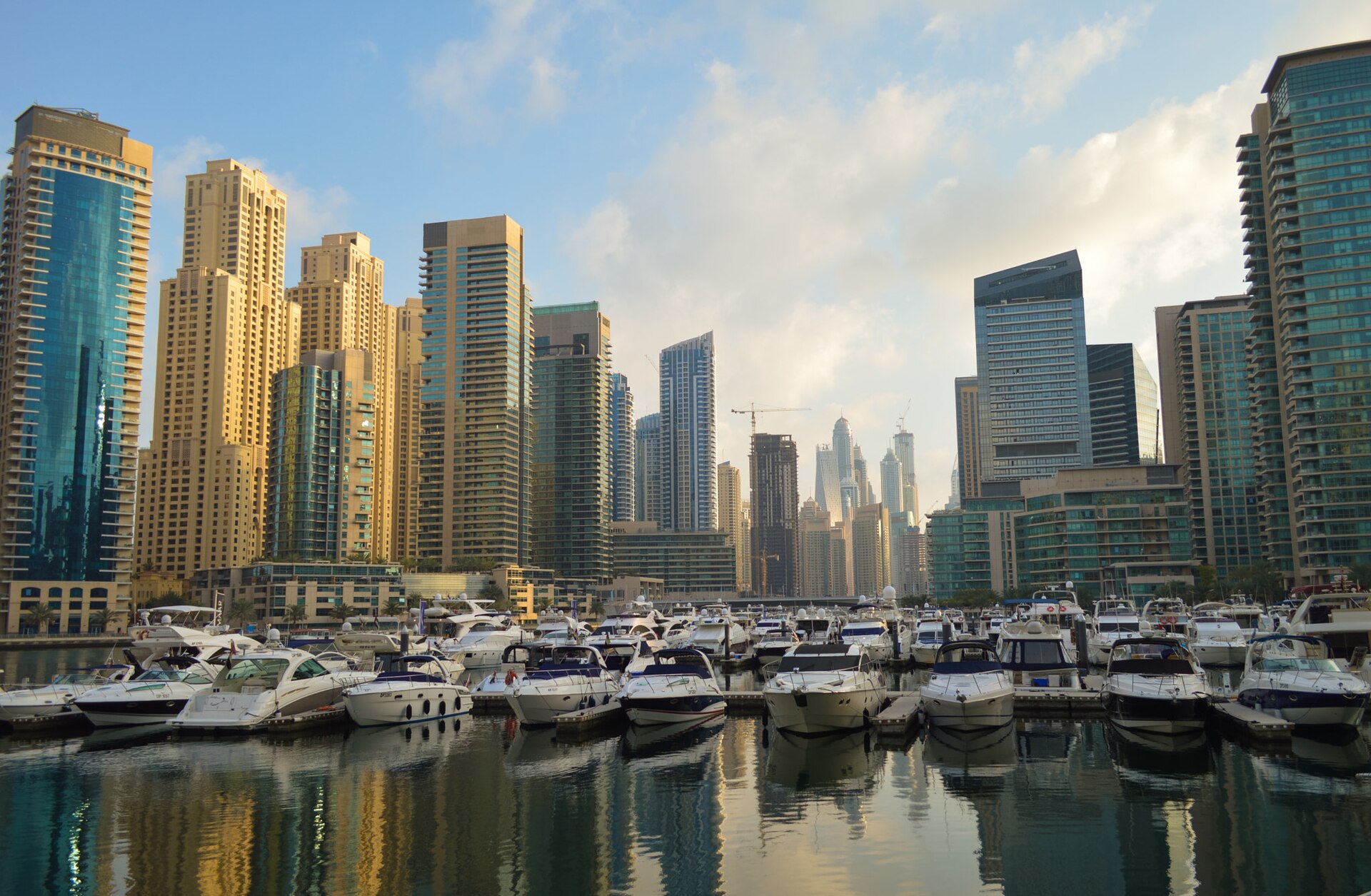
Dubai Marina is a purpose built canal city of residential towers, a seven kilometre pedestrian promenade, and the city's most concentrated collection of beach clubs and Friday brunches. The nightly rate for a five star hotel here runs roughly 600 to 1,200 AED in summer and double that in winter. The metro Red Line runs along the eastern edge of the Marina, stopping at Damac Properties and DMCC stations, but the Marina itself is a half kilometre walk from either station through open air. On a July afternoon that walk feels like a treadmill at full incline. The Marina is bad at old Dubai atmosphere, creek abras, gold souks, and any sense that you are not in a global resort corridor. If your Dubai is a pool lounger at noon, a beach club minimum spend for a day bed, and a short taxi to a Palm Jumeirah dinner, this is your zone.
Downtown Dubai: Burj Khalifa Proximity and Metro Truth
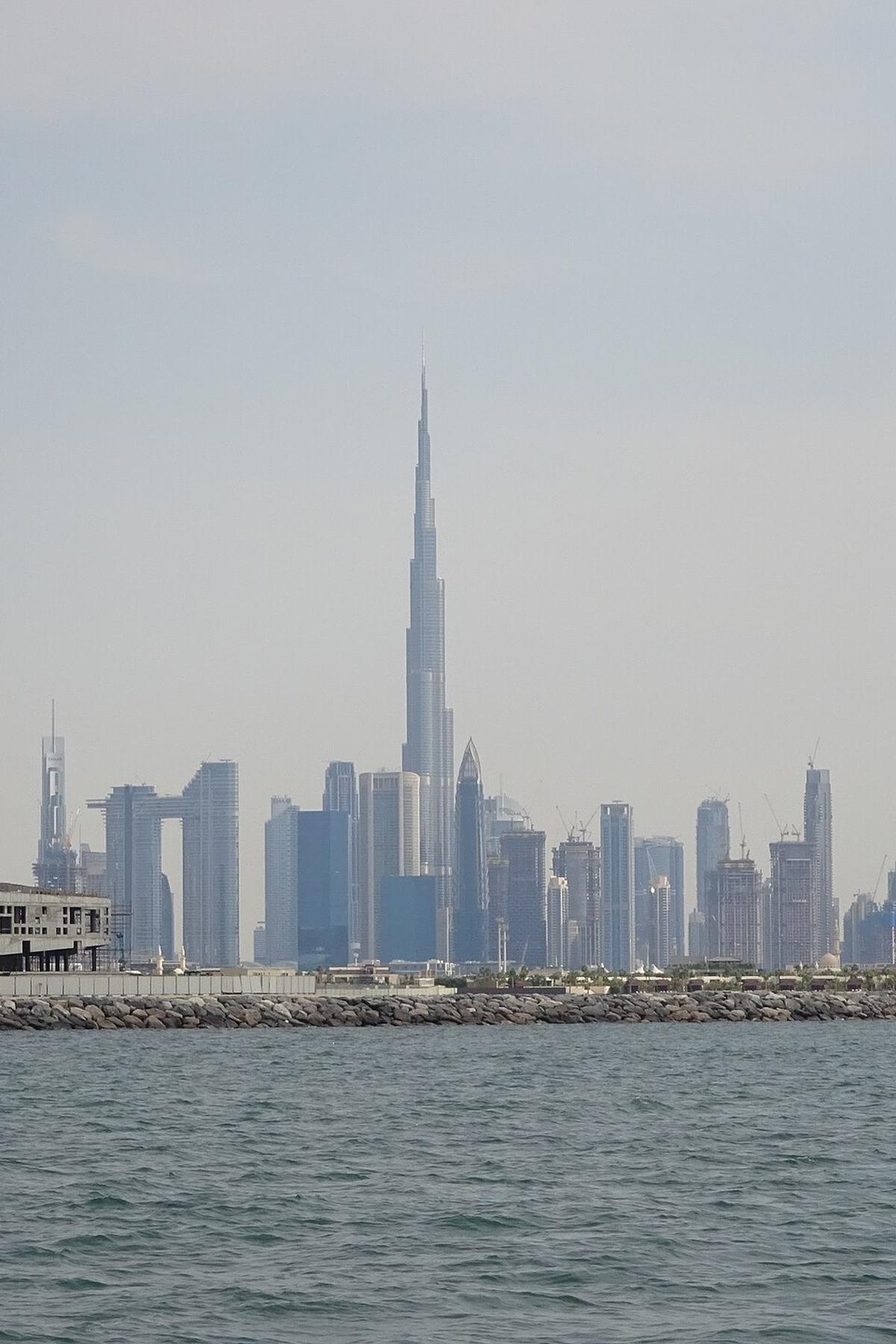
Downtown, centred on the Burj Khalifa and Dubai Mall, is the district of choreographed spectacle. You are inside the Dubai Mall air conditioned walkway network, which means you can reach the Burj Khalifa observation deck, the fountains, and 1,200 shops without stepping into the sun for more than 40 metres. The metro Red Line stops at Burj Khalifa/Dubai Mall station, and an air conditioned pedestrian bridge connects it to the mall. Five star nightly rates run 700 to 1,500 AED in summer. Downtown is bad at beaches. The nearest public beach is a 20 minute taxi. It is also bad at silence: the fountain music and Eid fireworks mean noise until 11 PM every night. If you want to see the Burj Khalifa from your hotel window and walk to the Dubai Aquarium in air conditioning, stay here.
The Palm Jumeirah: Isolation with a Price Tag
The Palm Jumeirah is a man made archipelago of fronds, each lined with villas and beachfront resorts, connected by a single monorail that runs from Gateway Station to Atlantis Aquaventure. The monorail does not connect to the metro. To get anywhere outside the Palm you need a taxi, and from the tip of the trunk to Downtown is a half hour ride costing 90 to 120 AED. Five star nightly rates start at 1,000 AED and climb past 3,000 AED for beachfront suites. The Palm is bad at spontaneity. You cannot step out for a coffee and a souk wander. You are on a resort island that demands a deliberate exit. Dubai Marina vs Palm Jumeirah comes down to this: the Marina gives you walkable restaurants and metro access; the Palm gives you a private beach and longer taxi rides to everything else. Budget for 80 to 120 AED per taxi trip if you stay on the Palm and plan to see old Dubai.
Bur Dubai and Deira: Creek, Souks, and History
Bur Dubai, on the south side of Dubai Creek, and Deira, on the north, are the old city. The atmosphere is tight alleys, the Gold Souk in Deira, the Spice Souk, and wooden abras crossing the creek for 2 AED per person. This is the only district where you can eat a 15 AED shawarma, haggle for saffron, and watch cargo dhows being loaded by hand. Mid range hotels in Bur Dubai run 250 to 500 AED a night; in Deira, 200 to 450 AED. The metro Red Line and Green Line both serve the area: Al Fahidi and Union stations put you on the main spine. Deira and Bur Dubai are bad at beach access. The nearest public swimming is a 20 minute taxi, and the beach clubs of the Marina are 35 minutes and 70 AED away. If you are here for the gold souk, the creek abra ride, and the iftar tents that appear during Ramadan, you will save 60 per cent on your room cost compared to Downtown.
Beach District vs Downtown Hotels: The Decision Rule
Book a beachside district if your day is built around water: a morning at the pool, a beach club lunch, a late afternoon swim. Book Downtown if your day is built around indoor spectacle: the Dubai Mall, the Burj Khalifa, the fountains, and air conditioned corridors. The metro Red Line connects both, but the connection from the Marina and JBR Beach to Downtown is a train ride plus a walk at each end. A taxi between the two districts costs 50 to 80 AED and takes 25 minutes in off peak traffic. If you split your stay, spend the first half in the Marina and the second half Downtown.

What the Summer Heat Really Costs You
Dubai between June and September is a city that rewrites its own rules. The air temperature hits 45 degrees Celsius. Humidity from the Gulf pushes the felt temperature past 50. Walking 400 metres to a metro stop is not a convenience; it is an experience that leaves you drenched and needing to sit in air conditioning to recover. The heat does not just make you uncomfortable. It changes what you can do, when you can do it, and what it costs.
Walking Becomes a Paid Decision
Above 42 degrees, any walk longer than five minutes becomes an endurance event. The air conditioned walkway network in Downtown and the Dubai Mall is the only pedestrian infrastructure that works in summer. Outside those corridors, you choose between taxis and sweat. A walk from a Marina hotel to the nearest metro stop costs you a dry cleaning bill and a shower. Budget for an extra 60 to 100 AED per day in taxi fares during summer months, even if your hotel is near a stop, because you will not walk the last kilometre.
Beach Club Minimums and Pool Hours
Beach clubs along JBR and the Palm Jumeirah operate on a minimum spend model: 250 to 400 AED per person on a weekday for a sunbed, 400 to 600 AED on a weekend, redeemable against food and drink. In summer the sun becomes unusable between 11 AM and 3 PM. You pay the same minimum but use the pool for four hours instead of eight. Some clubs reduce day bed rates in July and August. The better strategy is to book a hotel with a decent pool and skip the beach club entirely, then use the money for a Friday brunch inside air conditioning.
Desert Safari Timing Changes Everything
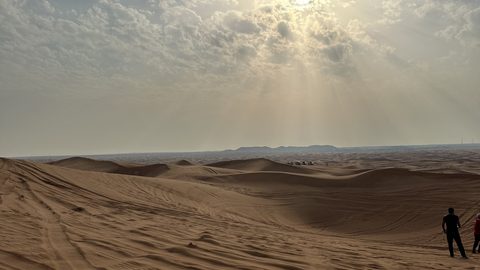
Desert safaris in summer shift to late afternoon pickup. A standard tour picks you up from your hotel between 3 PM and 4 PM instead of 2 PM in winter. The dune bashing runs from 4:30 to 5:30 PM, sunset is at 6:45 PM, and dinner in the camp ends by 9 PM. The heat inside a 4x4 with no working air conditioning is real. Book a private car and confirm the vehicle has functioning AC before you pay. The ride from Downtown to the desert gate takes 45 minutes; from the Marina or Palm Jumeirah, an hour. Budget the taxi to the pickup point into your day.
Mall Opening Hours and Ramadan Rules
Dubai Mall and Mall of the Emirates stay open until midnight in summer, with extended hours during Ramadan when many shops open from 10 AM to 2 AM and close during the iftar prayer break. If you are visiting during Ramadan, restaurants open only after sunset for dining in. Alcohol service follows sharia law: no alcohol is served during daylight hours in Ramadan, and nightclub hours are restricted. Hotels still serve alcohol to non Muslim guests inside their bars after sunset, but the public atmosphere is muted. If you want a party holiday, do not come in Ramadan.
Summer Travel Tips That Save Money
Book your hotel in June or August, not July. July is the European school holiday window and the highest summer rates. A five star room in the Marina that costs 800 AED in June jumps in late July. The metro Red Line runs frequently, but the trains are packed from 5 PM to 8 PM with commuters escaping the heat. If you are taking a taxi from Dubai International Airport, the meter starts at 25 AED and the ride to the Marina or Palm Jumeirah costs 90 to 130 AED depending on traffic. Use the official taxi rank at Terminal 1 and Terminal 3; avoid independent drivers who quote flat rates.
What the Heat Calendar Looks Like
June: tolerable in the mornings, 42 degrees by 11 AM. Beach club sunbeds are available without booking. July: high season for European tourists, 45 degree daily highs, swimming pools are crowded, sunbeds booked by 10 AM. August: identical to July, but humidity peaks. September: still above 40 degrees until the third week, then a drop, and the city comes back to life. Treat June, July, and August as indoor months. Do your sightseeing at 8 AM or after 7 PM. Spend 11 AM to 5 PM in malls, museums, and hotel pools.
Dubai Summer Travel Tips: the Practical List
- Carry a reusable water bottle. Dubai tap water is non potable, but every hotel and mall has water stations. You will drink three litres a day.
- Download the RTA Dubai taxi app. It gives you the meter estimate and lets you book a taxi from your current location without standing in the heat at a rank.
- Check the desert safari pickup policy before booking. Some operators refuse to pick up from Palm Jumeirah and Bur Dubai due to journey time. You will pay extra for a transfer to a central pickup point.
- If you stay in Deira or Bur Dubai, use the metro to reach the Marina for a beach day. The ride from Union station to Damac Properties is half an hour and costs 7.50 AED. Pack your swimsuit and change at the beach club.
- Friday brunch runs from 12:30 PM to 3:30 PM. Book two weeks in advance during summer for the big Dubai Marina brunches at venues like Saffron or Jun's. The heat does not reduce demand.
.jpeg)
The One Decision That Defines Your Trip
The single most practical thing you can do right now is map your daily itinerary on a real map of Dubai and count the taxi rides between your hotel and your planned activities. If you are staying in Deira and planning four days of beach clubs in the Marina, you will burn cash in taxi fares each day and 90 minutes in transit. If you are staying in Downtown and planning one day at the beach and one desert safari, your taxi costs drop sharply. The heat doubles the cost of a bad location because you will take a taxi for a 400 metre walk. Choose a district that reduces your exposure to the sun and your exposure to the meter. Book Downtown if you want spectacle and air conditioning. Book the Marina if you want water and walkable nightlife. Book Deira and Bur Dubai if you want the old city and a 60 per cent discount on your room rate. Then plan your day around the sun: 8 AM for the creek abra ride, 7 PM for the beach, and the hours between spent inside a mall, a museum, or a pool.
Frequently Asked Questions
Which part of Dubai is best for a first time visitor?
Downtown Dubai for first timers who want the Burj Khalifa, Dubai Mall, and maximum air conditioned walkway connections. Dubai Marina for first timers who want beach access and evening walks on the promenade. Avoid Deira and Bur Dubai on a first visit unless you are specifically here for the gold souk and creek abras, because the lack of beach and the taxi costs to the main attractions eat into your time.
Is the Palm Jumeirah worth the extra cost?
The Palm Jumeirah is worth it if you want a private beach resort experience and do not plan to leave the resort much. It is not worth it if you want to explore the city, because every excursion costs a half hour taxi ride and 90 to 120 AED each way. The monorail does not connect to the metro, so you are taxi dependent.
How much does a taxi from Dubai Airport cost to the Marina?
A taxi from Dubai International Airport to Dubai Marina costs 90 to 130 AED depending on traffic and the time of day. The journey takes 30 to 45 minutes. Do not accept a flat rate from independent drivers outside the terminal; use the official taxi rank.
Can I walk between the metro station and my hotel in summer?
Yes, but only if the walk is under 400 metres and you carry water. The metro Red Line stops at Damac Properties and DMCC in the Marina require a walk through open air to reach many hotels. That walk is miserable in July and August. Hotels in Downtown are closer to the Burj Khalifa/Dubai Mall stop, and many have air conditioned walkway connections.
What is the minimum spend at Dubai beach clubs in summer?
Beach club minimum spends in summer range from 250 to 400 AED per person for a sunbed on a weekday, and 400 to 600 AED on a weekend. The minimum is redeemable against food and drink. Check if the club has a pool; some clubs like Zero Gravity and Nikki Beach have both pool and beach access.
Is it safe to drink alcohol in Dubai?
Alcohol is served in licensed hotels, bars, and clubs. Public drinking and drunkenness are illegal under sharia law. During Ramadan, alcohol is not served during daylight hours, but hotel bars resume service after sunset. You can buy alcohol from licensed shops like African + Eastern with your passport, but most visitors simply drink at their hotel.
When is the best time to visit Dubai to avoid extreme heat?
November to March offers daytime temperatures of 25 to 30 degrees, perfect for outdoor activities, beach days, and desert safaris. December to February is peak season with the highest hotel rates. If you must visit in summer, choose June or September over July and August, when temperatures are slightly lower and hotel rates are cheaper.
Read next
-
 The UAE Two Cities One Desert and the Four Months You Must Avoid
Plan a UAE trip around Dubai, Abu Dhabi, and the desert, and learn why June through September is the four-month window you must avoid.
The UAE Two Cities One Desert and the Four Months You Must Avoid
Plan a UAE trip around Dubai, Abu Dhabi, and the desert, and learn why June through September is the four-month window you must avoid.
-
 Best Time to Visit the UAE and the Four Months You Should Not
The best time to visit the UAE is November to March. The four months from June through September are genuinely too hot for outdoor activity, and Ramadan shifts everything.
Best Time to Visit the UAE and the Four Months You Should Not
The best time to visit the UAE is November to March. The four months from June through September are genuinely too hot for outdoor activity, and Ramadan shifts everything.
-
 UAE Costs at the Bottom and the Top from Dorm Bed to Palace Suite
UAE costs span a Deira dorm bed and a Palm palace suite. Here is the real daily spend at the bottom and the top, with every line item counted in Dirhams.
UAE Costs at the Bottom and the Top from Dorm Bed to Palace Suite
UAE costs span a Deira dorm bed and a Palm palace suite. Here is the real daily spend at the bottom and the top, with every line item counted in Dirhams.
-
 Dubai vs Abu Dhabi Which UAE City Fits Your Trip
Dubai or Abu Dhabi for your UAE trip? One is spectacle and nightlife, the other culture and calm. Most travellers should do both, but your base depends on what kind of trip you want.
Dubai vs Abu Dhabi Which UAE City Fits Your Trip
Dubai or Abu Dhabi for your UAE trip? One is spectacle and nightlife, the other culture and calm. Most travellers should do both, but your base depends on what kind of trip you want.
-
 Getting to Indonesia's Eastern Islands Without Routing Through Bali
Skip the Bali default. Here's how to reach Flores, Komodo, and Raja Ampat through Makassar, Lombok, and Surabaya with real costs.
Getting to Indonesia's Eastern Islands Without Routing Through Bali
Skip the Bali default. Here's how to reach Flores, Komodo, and Raja Ampat through Makassar, Lombok, and Surabaya with real costs.
-
 Bali, Lombok, or Nusa Penida — Ferry Routes, Real Costs, and How to Decide
Compare ferry routes, crossing times, and real ticket prices for Bali, Lombok, and Nusa Penida — then match the right island to your trip length and goals.
Bali, Lombok, or Nusa Penida — Ferry Routes, Real Costs, and How to Decide
Compare ferry routes, crossing times, and real ticket prices for Bali, Lombok, and Nusa Penida — then match the right island to your trip length and goals.