Lombok: What Bali Was, and Why That Sentence No Longer Needs Finishing
Lombok delivers empty white bays, fiery grilled chicken, and surf breaks without the crowds. Here is what the crossing costs and what the island still lacks.
- Flag
-

- ISO code
- ID
- Currency
- IDR
Lombok: What Bali Was, and Why That Sentence No Longer Needs Finishing
The fast boat from Bali to Lombok costs between IDR 250,000 and 600,000, takes 1.5 to 2.5 hours, and lands you in a place where the ATM runs dry by Saturday evening, your guesthouse demands cash, and the Wi‑Fi drops the moment a cloud passes. That is not a warning. That is the value of the crossing. Lombok what Bali was no longer needs the sentence that usually follows it because the sentence was always about what Bali lost. Lombok did not lose it. Lombok just has not finished building it yet.
You board at Serangan, Sanur, or Padangbai. You arrive at Teluk Nare, Bangsal, or the west‑coast town of Senggigi. Thirty‑plus companies run these routes and sea conditions turn choppy from June to August, rough enough that cancellations are routine. The public ferry from Padangbai to Lembar costs IDR 56,000, takes four to five hours, and runs every one to two hours around the clock. The public ferry is how you learn whether you actually want to be on Lombok. The fast boat is how you decide you already know.
Lombok Travel Guide: What Works and What Frays
A two‑day one‑night Rinjani trek package runs IDR 1,500,000 to 2,500,000 per person. A three‑day two‑night summit‑and‑lake package runs IDR 2,500,000 to 4,500,000 per person. Both require a mandatory guide and porter booked via a licensed operator. The permit fee for the national park in 2024 was IDR 150,000 per person on weekdays and IDR 225,000 on weekends, but that figure changes annually. The park authority publishes the rate in force. You book the trek through a licensed operator only; independent entries are forbidden. The park closes January through March for monsoon. The best months are April through November, with July and August peak.
The trek starts at 600 metres elevation on the Senaru route or 1,150 metres on the Sembalun route. The summit sits at 3,726 metres. Total ascent on the Sembalun route is roughly 2,576 metres. The fitness requirement is high. The summit push crosses steep volcanic scree and operators will ask about your hiking history before confirming a slot.
Cash and Connectivity
Telkomsel is the most reliable SIM across the island. Buy it at DPS airport or at an official Grapari store. Do not buy a tourist package from a kiosk. On the south coast and in parts of the interior, Telkomsel stays patchy. WhatsApp is how you book everything. Hotels, drivers, and tour operators expect you to use it for confirmations. Cash is king. ATMs run dry on weekends. Cards are refused at most guesthouses. Carry enough rupiah for three days at a time.
When to Skip It
Idul Fitri floods all transport. Prices triple and many businesses close for a week. The dates shift annually, roughly between March and May. Nyepi in Bali grounds the entire island for 24 hours in March. The airport closes. No outdoor activity. If you transit through Bali during Nyepi you are stuck. Ramadan reduces services across Lombok. Many warungs close during daylight, alcohol sales are restricted, and trekking operates with reduced support. The dry‑season months of July and August and the mid‑December to early‑January holiday window push accommodation prices up 50 to 100 percent and fill the limited beach clubs to capacity.
Lombok vs Bali: the Real Difference
Bali costs more. A low‑end week in Bali runs IDR 3,500,000 to 5,000,000. The same week on Lombok runs IDR 2,500,000 to 4,000,000. Mid‑range on Bali is IDR 8,000,000 to 14,000,000. Mid‑range on Lombok is IDR 6,000,000 to 10,000,000. High‑end on Bali reaches IDR 35,000,000. High‑end on Lombok tops out around IDR 25,000,000. The gap is real but not dramatic. What changes is what those numbers buy.
On Bali you buy infrastructure. On Lombok you buy space. The south coast, around Kuta Lombok, offers empty white bays and a raw coastline that Bali lost a decade ago. Tanjung Aan Beach has twin bays and turquoise water. Gerupuk Bay is the main surf bay on the south coast, a reef break with inside waves for beginner‑to‑intermediate surfers and outside waves for the advanced. Ekas Bay has two main peaks, Inside Ekas and Outside Ekas, for intermediate‑to‑advanced surfers. Desert Point at Bangko Bangko is a left‑hand reef break with a long barrel for experts only, best from May through October during the dry‑season trade‑wind swell. These surf breaks are deserted on average days. They are not empty because they are secret. They are empty because most people stay on Bali.
The Friction You Pay For
Lombok does not suit nightlife‑focused travellers. Senggigi, the west‑coast main town, has limited nightlife: a few beach bars and live‑music venues. Alcohol is served in tourist‑oriented hotels and restaurants only; local warungs do not serve it. The dress expectation outside resorts requires shoulders and knees covered and a sarong for mosque entry. The Gili Islands are more relaxed. Swimwear is acceptable on beaches but not in village interiors. Lombok is roughly 96 percent Muslim. That is not a problem to solve. It is the fact of the place.
South Lombok Surf Breaks: Where the Water Works
Gerupuk Bay sits on the south coast and offers both inside and outside reef breaks. Beginners and intermediates take the inside. Advanced surfers paddle out further. Ekas Bay, also on the south coast, has Inside Ekas and Outside Ekas peaks, intermediate to advanced. Desert Point at Bangko Bangko is expert only, a long barrelling left that works best from May to October. The swell is consistent during the dry‑season trade winds. You do not need a boat. You need to know which break matches your ability and you need to check the tide before you paddle out.
The south coast is raw. There are no surf shops every fifty metres. Bring your own board or rent from a homestay that has a stack of faded epoxy in the corner. The roads to the bays are mostly paved but narrow. The drive from Mataram to Kuta on the south coast takes 1.5 to 2 hours for 50 kilometres. Average road speed is 30 to 40 km/h on main roads and 15 to 25 km/h on mountain and rural roads. Budget for a driver or rent a scooter and accept that the asphalt ends without warning.
Tanjung Ringgit
A 60‑minute drive from Kuta Lombok takes you to Tanjung Ringgit, limestone cliffs and empty coves. No facilities. No shade. Bring water and leave nothing behind.
Mount Rinjani Trek: the Physical Decision
The two‑day one‑night option takes you to the crater rim only. You start at 600 metres elevation on the Senaru route or 1,150 metres on the Sembalun route. You sleep at the rim and descend the next morning. You do not see the summit and you do not reach the lake. The three‑day two‑night option includes the summit push to 3,726 metres and the crater lake. Total ascent from the Sembalun route is roughly 2,576 metres. The fitness requirement is high. The summit push crosses volcanic scree that shifts under every step and the altitude affects sleep.
Book the trek through a licensed operator only. The permit fee is published annually by the national park authority. The 2024 rate was IDR 150,000 per person weekdays and IDR 225,000 weekends. The park closes January through March for monsoon. April through November are the best months, with July and August peak and crowded. The Ramadan effect on trekking means reduced support services but the operation continues.
What You Carry
Your operator provides the tent, food, and porter. You carry a daypack with water, a rain jacket, and layers for the summit cold. The humidity makes patience a survival skill. The trail is steep and the air is thick until you climb above the cloud line.
Lombok Itinerary 5 Days: Too Short, Here is the Only Way
Five days on Lombok is a mistake. The minimum for a satisfying trip is ten. Two of those days burn in transit between islands. Travellers who book three islands in seven days spend half the trip staring at ferry terminals, port waiting rooms, and airport security queues. If you have five days, skip the Gilis entirely and base yourself on the south coast near Kuta Lombok. Surf Gerupuk Bay one morning, visit Tanjung Aan Beach the next, and book a two‑day one‑night Rinjani trek from the Sembalun route. That kills three days. The remaining two are recovery and a slow journey back to the airport.
Lombok International Airport in Praya is roughly 40 kilometres southeast of Mataram. The flight from Denpasar to Praya takes 30 to 40 minutes on Lion Air, Wings Air, or Citilink. The one‑way fare ranges from IDR 400,000 to 1,200,000, changing annually. The flight from Jakarta to Praya takes one hour 50 minutes. The domestic flight is the better option if you are already in Indonesia. The fast boat from Bali is the better option if you are island hopping. Do not do both in five days.
The South Coast in Demand
Kuta Lombok is not Kuta Bali. It is a single main road with a few guesthouses, a minimarket, and a warung or two serving ayam taliwang, the fiery grilled chicken with chilli paste served with plecing kangkung. Sate rembiga, spiced beef satay with a coconut‑milk marinade, is another Lombok staple you find in the local warungs. The gastronomy is direct and unapologetically spicy. The south coast’s raw quality is what draws the people who arrive looking for something different. They find Tanjung Aan, Gerupuk Bay, and Ekas Bay without the soundtrack of a beach club.
The area is being sold as the next Bali. That label is dangerous because it sets an expectation of infrastructure that does not exist. The next Bali implies a pipeline of convenience. What is there now is the opposite of convenience. It is empty bays, deserted surf breaks, and cash‑only guesthouses where the Wi‑Fi drops. That is the honest value of the place.
Sasak Village and the Cultural Layer
The Sasak villages of Sade near Praya and Ende near Senggigi offer traditional thatched huts called bale tani, built from bamboo and thatch with cow‑dung floors. The cultural demonstration at Sade is organised and feels rehearsed. The touts are persistent and organised. Polite refusal must be repeated five times. Ende, nearer to the west coast, is quieter and less polished. Visit either as a window into the traditional Sasak house and lifestyle, not as an immersive experience. Lombok does not offer untouched culture. It offers a living culture that happens to accommodate visitors.
Pura Meru in Mataram is the largest Hindu temple on the island. It sits quietly compared to Balinese temples because Lombok is overwhelmingly Muslim. The temple is worth a stop if you are in Mataram sorting out transport or cash. The walk from the parking area to the entrance is short. The dress expectation applies: shoulders and knees covered, sarong required.
.png)

West Coast and the Gili Island Transfer Point
Senggigi on the west coast has dark volcanic‑sand beaches and calm water in the dry season. The nightlife is limited to a few beach bars and live‑music venues. Alcohol is served in tourist‑oriented hotels and restaurants only. The town functions primarily as a transfer point for the Gilis. The drive from Mataram takes 30 to 45 minutes for 12 kilometres. Bangsal, the main departure point for the islands, is 25 kilometres from Mataram, a 45‑to‑60‑minute drive.
The three Gilis each serve a different traveller. Gili Trawangan is the backpacker party island: no cars, sunrise swings. Gili Air is the couples’ compromise: quieter bars, still social. Gili Meno is honeymoon silence: turtles offshore, minimal Wi‑Fi. The public boat between the three takes 5 to 10 minutes. The snorkel with resident turtles at Gili Meno turtle point is a reliable experience. The Gili seafood barbecue on the beach every night is fresh snapper, tuna, and lobster. Negotiate hard. The price quoted is not the price you pay.
Tiu Kelep Waterfall and the Jungle Walk
Tiu Kelep Waterfall in the north sits in the jungle near the Rinjani trailheads. The walk from the entrance takes about 30 minutes. The trail is wet and slippery. The waterfall drops into a deep pool you can swim in if the current is not too strong. Arrive early morning, before the trekking groups roll in. The drive from Mataram to the Senaru area takes roughly 2.5 to 3 hours for 70 kilometres. The mountain roads are steep and winding. Average speed drops to 15 to 25 km/h. Book a driver for the day or combine the Tiu Kelep visit with the start of a Rinjani trek.
Fast Boat from Bali: the Crossing Reality
The fast boat from Bali departs from Serangan, Sanur, or Padangbai. It arrives at Teluk Nare, Bangsal, or Senggigi. The journey takes 1.5 to 2.5 hours depending on departure and arrival points. The one‑way fare in 2024 ranged from IDR 250,000 to 600,000. That figure changes annually; operators publish current fares on their booking platforms. Rough crossings are common June through August because of strong southeast trade winds. Cancellations are possible. The swell from the northwest monsoon in December through February is equally risky. The public ferry from Padangbai to Lembar costs IDR 56,000, takes four to five hours, and runs every one to two hours, 24 hours a day. The public ferry is the budget option and the option that teaches you patience.
Cash Only Guesthouse and the ATM Run
Low‑end accommodation on Lombok costs IDR 100,000 to 250,000 per night for a dorm bed or basic homestay. The high end runs IDR 1,500,000 to 5,000,000 per night for a resort or private villa. The cash‑only guesthouse is the norm at the low end. ATMs run dry on weekends. Pull out cash on Thursday if you want to eat on Sunday. Patchy Telkomsel reception means your digital payment app may not load. Carry physical rupiah and keep it in two different places. The weekly budget for low‑end travel is IDR 2,500,000 to 4,000,000. Mid‑range, with a private room, a mix of local and Western food, and some activities, runs IDR 6,000,000 to 10,000,000. High‑end, with a resort, guided treks, and a private driver, runs IDR 15,000,000 to 25,000,000 or more.
What Lombok is Bad at
Lombok is bad at reliability. The fast boat cancels without notice. The ATM has no cash by Saturday afternoon. The Wi‑Fi drops when a second person connects. The humidity makes every effort feel twice as hard. The roads are narrow and winding and the average speed on mountain routes is 15 to 25 km/h. The touts at the Rinjani trek entry points and the Sasak villages are persistent. Polite refusal must be repeated five times. The beach‑resort‑only visitor expecting Bali‑style beach clubs will be disappointed. The nightlife‑focused traveller will find nothing to do after 10 pm. The traveller who needs unrestricted alcohol access will struggle. Lombok does not suit those profiles and it does not pretend to.
| Spending Tier | Lombok | Bali Comparison |
|---|---|---|
| Low end (dorm or basic homestay, local food) | IDR 2,500,000 4,000,000 | IDR 3,500,000 5,000,000 |
| Mid range (private room, mix of food, some activities) | IDR 6,000,000 10,000,000 | IDR 8,000,000 14,000,000 |
| High end (resort, guided treks, private driver) | IDR 15,000,000 25,000,000+ | IDR 18,000,000 35,000,000+ |
Common Questions
How do I get from Bali to Lombok?
Fast boat from Serangan, Sanur, or Padangbai to Teluk Nare, Bangsal, or Senggigi. Journey time is 1.5 to 2.5 hours. One‑way fare in 2024 was IDR 250,000 to 600,000. Public ferry from Padangbai to Lembar costs IDR 56,000 and takes 4 to 5 hours. Domestic flight from Denpasar to Praya takes 30 to 40 minutes and costs IDR 400,000 to 1,200,000.
Is Lombok cheaper than Bali?
Yes. A low‑end week on Lombok runs IDR 2,500,000 to 4,000,000 compared to IDR 3,500,000 to 5,000,000 on Bali. Mid‑range is IDR 6,000,000 to 10,000,000 on Lombok versus IDR 8,000,000 to 14,000,000 on Bali. High‑end is IDR 15,000,000 to 25,000,000 on Lombok versus IDR 18,000,000 to 35,000,000 on Bali.
How many days do I need for Lombok?
Minimum 10 days. Two of those days are lost in transit. A 5‑day itinerary forces you to skip the Gilis and base yourself on the south coast for a rushed sampler.
What is the best month to trek Mount Rinjani?
April through November during the dry season. July and August are peak and crowded. The park closes January through March for monsoon.
Can I use my credit card on Lombok?
Cards are refused at most guesthouses. ATMs run dry on weekends. Carry cash and keep it in two separate places. Telkomsel reception is patchy on the south coast and in the interior, so digital payment apps may not load.
Is alcohol available on Lombok?
Alcohol is legal but restricted. It is served in tourist‑oriented hotels and restaurants and in some minimarkets. Local warungs do not serve it. The Gili Islands are more relaxed. During Ramadan, alcohol sales are further restricted.
What should I wear on Lombok?
Outside resorts, cover shoulders and knees. A sarong is required for mosque entry. On the Gili Islands, swimwear is acceptable on beaches but not in village interiors. Lombok is roughly 96 percent Muslim and the dress expectation is conservative.
Read next
-
 Indonesia Which Island Which Season and How to Get Between Them
Bali, Lombok, the Gilis or Java: which island fits your trip, which season makes the logistics work, and what the crossings actually cost in rupiah and hours.
Indonesia Which Island Which Season and How to Get Between Them
Bali, Lombok, the Gilis or Java: which island fits your trip, which season makes the logistics work, and what the crossings actually cost in rupiah and hours.
-
 Bali Lombok the Gilis or Java a Straight Answer on Which Island
Bali has the infrastructure, Lombok the raw coast, the Gilis the parties or the silence, and Java the chaos. Which Indonesian island actually fits your trip.
Bali Lombok the Gilis or Java a Straight Answer on Which Island
Bali has the infrastructure, Lombok the raw coast, the Gilis the parties or the silence, and Java the chaos. Which Indonesian island actually fits your trip.
-
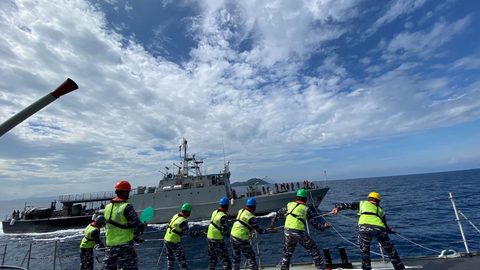 Fast Boats Between Bali Lombok and the Gilis Times Cost and the Sea
Fast boats connect Bali, Lombok and the Gilis in 90 minutes on a calm day. Ticket prices in rupiah, departure ports, and the months when swell cancels everything.
Fast Boats Between Bali Lombok and the Gilis Times Cost and the Sea
Fast boats connect Bali, Lombok and the Gilis in 90 minutes on a calm day. Ticket prices in rupiah, departure ports, and the months when swell cancels everything.
-
 Best Time to Visit Indonesia Month by Month for Every Island
Month-by-month breakdown of Indonesia's seasons, crowds, and transport realities across Bali, Lombok, and the Gilis—so you pick the right window.
Best Time to Visit Indonesia Month by Month for Every Island
Month-by-month breakdown of Indonesia's seasons, crowds, and transport realities across Bali, Lombok, and the Gilis—so you pick the right window.
-
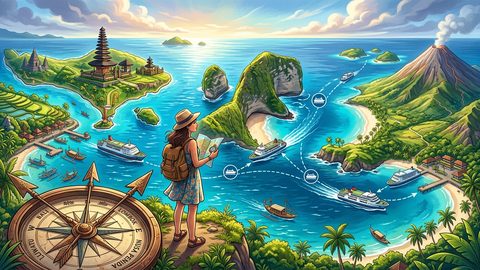 Bali, Lombok, or Nusa Penida — Ferry Routes, Real Costs, and How to Decide
Compare ferry routes, crossing times, and real ticket prices for Bali, Lombok, and Nusa Penida — then match the right island to your trip length and goals.
Bali, Lombok, or Nusa Penida — Ferry Routes, Real Costs, and How to Decide
Compare ferry routes, crossing times, and real ticket prices for Bali, Lombok, and Nusa Penida — then match the right island to your trip length and goals.
-
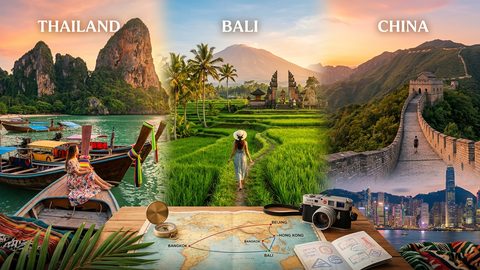 When to Visit Thailand, Bali, and China on an Extended Asia Itinerary
How to sync Thailand, Bali, and China into one itinerary, plus which months make all three destinations work at the same time.
When to Visit Thailand, Bali, and China on an Extended Asia Itinerary
How to sync Thailand, Bali, and China into one itinerary, plus which months make all three destinations work at the same time.
-
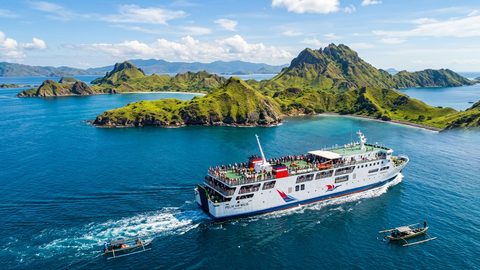 Getting to Indonesia's Eastern Islands Without Routing Through Bali
Skip the Bali default. Here's how to reach Flores, Komodo, and Raja Ampat through Makassar, Lombok, and Surabaya with real costs.
Getting to Indonesia's Eastern Islands Without Routing Through Bali
Skip the Bali default. Here's how to reach Flores, Komodo, and Raja Ampat through Makassar, Lombok, and Surabaya with real costs.