Learning to Dive on Koh Tao and What Your Certification Is Really Worth
Koh Tao certifies more divers than almost anywhere else. Here's what an Open Water course costs, which dive sites you'll train at, and what your card is worth after you leave.
- Flag
-
- ISO code
- TH
- Currency
- THB
What Your Koh Tao Diving Certification Actually Qualifies You for
Most travellers arrive on Koh Tao believing an Open Water certification from the Gulf of Thailand is a discount ticket to dive anywhere. That is half true. A PADI or SSI card from a Koh Tao dive centre carries exactly the same international recognition as one from Australia or the Maldives. What changes is what you can actually do with it once you leave the island.
The certification qualifies you to dive to 18 metres anywhere in the world with a buddy holding the same or higher qualification. It does not qualify you for deep dives, night dives, or wreck penetrations. That distinction matters. Koh Tao marketing blurs the line between finishing your course and being ready for advanced conditions. The 2024 price for that card on Koh Tao runs 8,000 to 12,000 THB, which is half what you would pay in comparable tropical destinations where the same course costs USD 350 to 500. The gap exists because more than 60 dive centres crowd this 21 square kilometre island. Competition drives prices down and operating costs stay low. You are not buying a discount product. You are buying a standard product at a discount price, but only if you choose the right centre.

Koh Tao Dive Schools: What Separates a Good One from a Cheap One
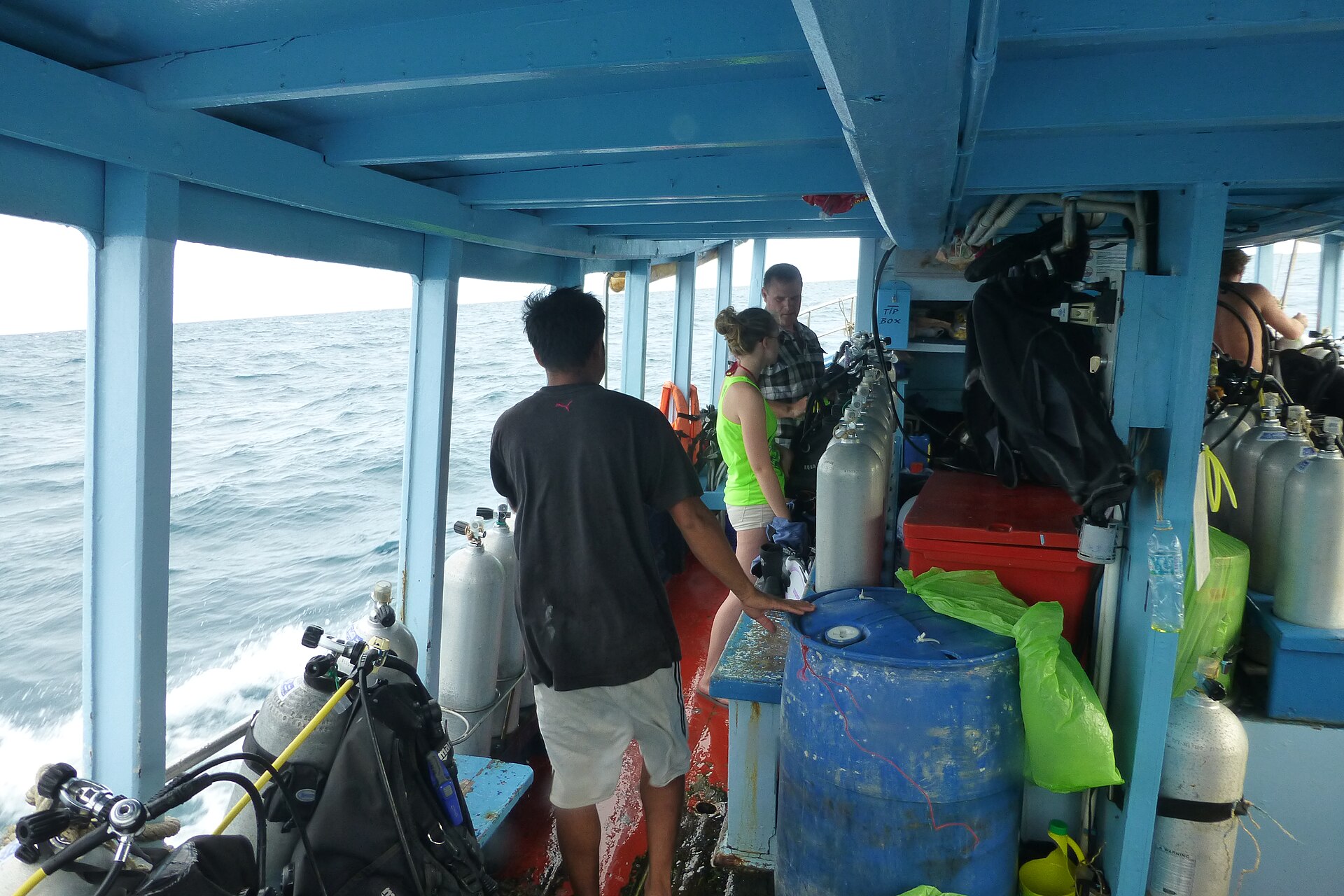
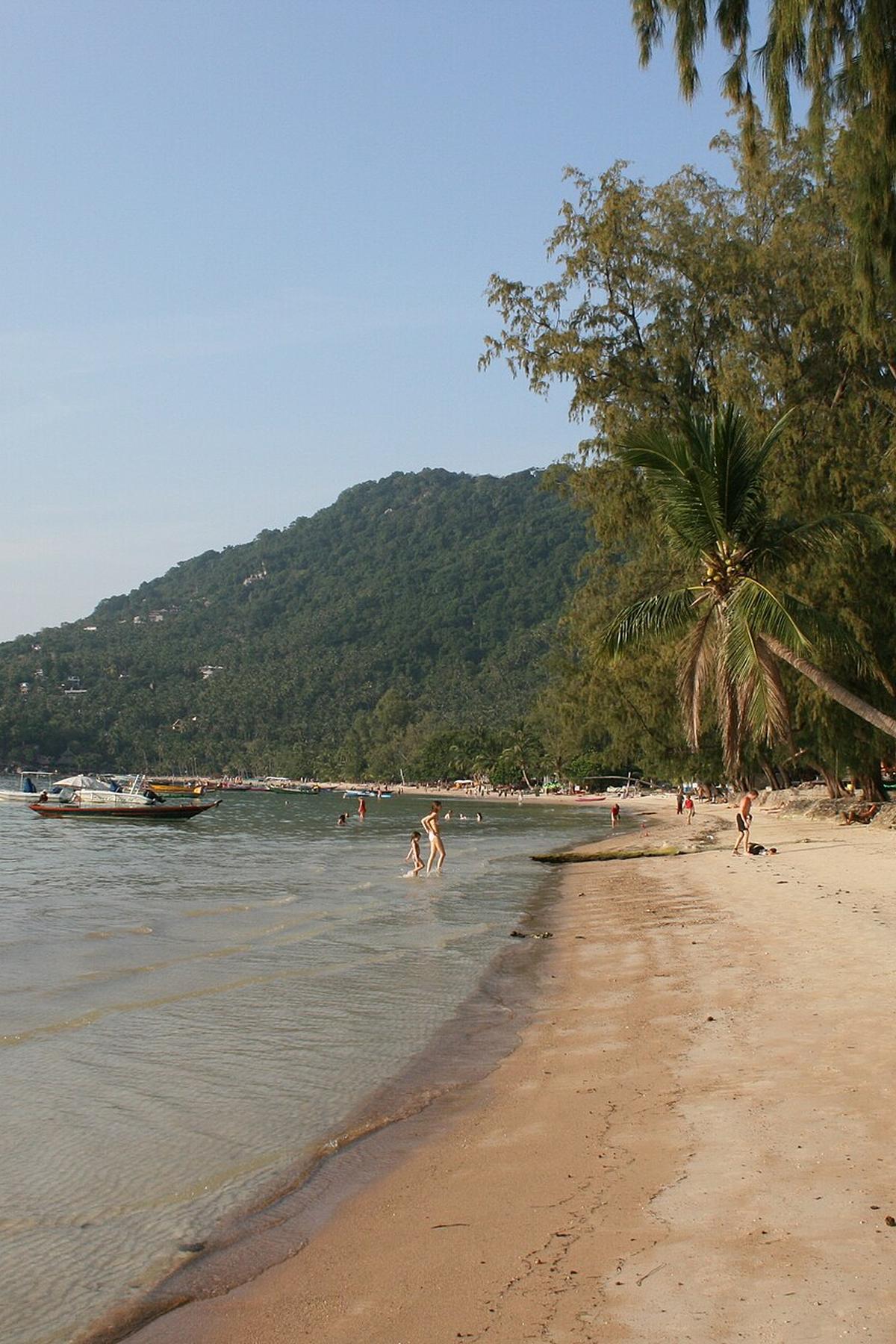
Sairee Beach is the spine of Koh Tao diving. The 1.7 kilometre stretch of pale coral sand holds the highest concentration of dive centres on the island. Every morning between 7 and 8 am the beach fills with students pulling on wetsuits. Walking the road behind Sairee Beach gives you a direct comparison of operations. You can see their equipment yards, their compressor rooms, and their boats tied up at the jetty.
A centre that keeps its own compressor room and maintains servicing records is safer than one that contracts out tank refills. Check whether the centre employs long-term instructors or seasonal freelancers. A freelance instructor working July through August, the peak season, may have been on the island for two weeks. A long-term instructor knows the site conditions at Chumphon Pinnacle when the current picks up and which side of White Rock shelters from the wind.
Agency Choice: PADI Versus SSI
The two agencies that dominate Koh Tao are PADI and SSI. Course standards are near identical. PADI requires four open water training dives to 18 metres over a minimum of three days. SSI follows the same structure but uses a digital learning platform instead of a manual. Both cards are recognised globally. The difference is in the instructor and the ratio. The PADI standard caps students at four per instructor. Some centres on Koh Tao voluntarily cap at two or three. During July and August, when European and Australian school holidays hit, some centres push the ratio to four. Demand is high. Ask the centre directly what ratio they guarantee for your course dates. A centre that cannot give you a number in writing is one to skip.
What the Course Fee Covers and What It Does Not
The 8,000 to 12,000 THB range includes all equipment rental, the PADI or SSI crew pack with digital materials, pool or confined water sessions at Sairee Beach or Japanese Gardens, and four boat dives to sites such as Twins or White Rock. It does not include accommodation. It does not include the 250 THB entry fee for a day trip to Koh Nang Yuan if your centre uses that site for a checkout dive. It does not include meals on the dive boat. Some centres bundle a dorm bed into the course fee. Confirm this before booking. A course that costs 8,000 THB with no accommodation is not cheaper than one that costs 11,000 THB with a five night stay included.
Safety Infrastructure You Must Verify
Koh Tao has no hyperbaric chamber. The nearest chamber is at Bangkok Hospital Samui, a ferry ride away. Every dive boat should carry a DAN oxygen kit, a first aid kit, and a marine radio. The centre should have an emergency action plan posted in the shop. Ask to see it. If the staff hesitate, go elsewhere. The difference between a centre that treats safety as a checkbox and one that treats it as a daily practice is the difference between finishing your Open Water course and spending your holiday managing barotrauma in a Samui hospital.
Open Water Course Koh Tao: Structure, Sites, and What Happens Each Day
The Open Water course on Koh Tao runs three to four days. Day one is confined water skills in a pool or a shallow beach entry at Japanese Gardens, where the maximum depth is 2 to 12 metres. You practice mask clearing, regulator recovery, and buoyancy control. Day two continues confined water skills and includes the theory exams, which you complete on a computer or paper depending on the agency. Days three and four are the four open water training dives to a maximum of 18 metres.
The checkout dives happen at sites close to shore. Twins is a common first open water site. It tops out at 12 metres and holds clownfish, blue spotted stingray, and banded sea snakes that keep your attention on the skills rather than the scenery. White Rock and Japanese Gardens are the other standard training grounds.
Where Your Deepest Training Dive Happens
The fourth dive of your Open Water course is the deepest, usually to 17 or 18 metres. Some centres run this dive at Green Rock or Shark Island. Shark Island occasionally produces a hawksbill turtle or a reef shark, but the main value is the wall profile that lets you practice a controlled ascent from depth. After your certification, you can join fun dives at Southwest Pinnacle, which drops to 30 metres, or Chumphon Pinnacle at 14 to 36 metres. You are limited to 18 metres until you complete the Advanced Open Water course. That takes another two days and includes a deep dive to 30 metres.
Koh Tao is one of the cheapest places in the world to stack certifications. An add-on price for Advanced Open Water runs 7,000 to 10,000 THB. Nitrox certification runs around 4,000 to 6,000 THB. If you plan to dive beyond Koh Tao, get your Nitrox certification here. The course price is roughly half what you would pay in Australia or the Caribbean.
Sairee Beach Diving: Why the Main Strip Dominates and Where to Escape
Sairee Beach is where the dive centre infrastructure is densest and the social life is loudest. Sunset brings fire shows on the sand and music from a dozen beach bars. If you want to roll out of your dorm and onto the dive boat by 7 am, Sairee Beach is your base. The trade-off is noise and crowds. July and August pack the beach with backpackers. Mid-range air-con bungalow prices reach 1,500 to 2,000 THB per night, nearly double the low season rate.
The quieter alternative is Chalok Baan Kao on the southern bay. The sand is coarser and the shallow reef flat drains at low tide. Centres there are fewer, which means smaller class sizes during peak season. Mae Haad, the ferry pier, is concrete-heavy and has limited swimming beach. Do not stay in Mae Haad unless you want to be on top of the ferry schedule.
When Sairee Beach Gets Too Full
August afternoons at Sairee Beach can feel like a queue for entry into the water. The dive boats leave from the pier at Mae Haad, not from the beach itself. Your morning walk from Sairee to the boat adds 15 minutes. Centres that operate from Sairee Beach use songthaews or trucks to move students and gear to the pier. Confirm whether your centre provides transport or expects you to rent a motorbike. Motorbike rental on Koh Tao runs 150 to 250 THB per day. The roads are a mix of concrete and dirt. The hills between Sairee and Chalok Baan Kao are steep. If you do not ride a scooter confidently, taxis cost 50 to 100 THB per trip within the island.
Koh Tao vs Koh Phangan Diving: What Each Island Does Better
Koh Phangan has dive centres, but it does not have Koh Tao's scale. More than 60 centres on Koh Tao mean more choice, lower prices, and a social scene built around dive courses. Koh Phangan has quieter sites like Sail Rock, which sits between the two islands and is accessible from both. The difference is time. From Koh Tao, Sail Rock is a day trip of roughly 45 minutes by dive boat. From Koh Phangan, it is also a day trip, but Koh Phangan's dive industry is smaller and fewer boats run the route.
Koh Tao holds the island sites that suit beginner divers best. Japanese Gardens, Twins, and White Rock have shallow profiles and calm conditions for most of the year. Koh Phangan has faster drop-offs and stronger currents at some sites. For the Open Water course, Koh Tao is the better choice. The confined water sites are dependable and the volume of students means instructors have taught hundreds of first-time divers. For experienced divers who want to avoid crowds and pay a premium for solitude, Koh Phangan works. For the certification itself, stay on Koh Tao.
Dive Site Conditions by Month: Visibility, Currents, and Whale Shark Season
Visibility on Koh Tao ranges from 5 to 30 metres depending on the month. January through April delivers the clearest water, 15 to 30 metres, with calm seas and light currents. July and August, the second peak season, drops visibility to 10 to 20 metres. Plankton blooms from the southwest monsoon feed the marine life but reduce clarity. September and October are the worst months. Visibility falls to 5 to 15 metres and rough seas can close sites on the exposed side of the island. November visibility improves to 10 to 25 metres as the northeast monsoon settles in.
Plan your course around January to April for the best conditions. If you arrive in July or August, accept that visibility will be average. Whale shark sightings peak during March to May and again from September to October. Chumphon Pinnacle and Southwest Pinnacle are the most reliable sites for whale shark encounters, though no site guarantees anything. Sail Rock also produces seasonal sightings of whale sharks, chevron barracuda, and giant moray eels inside the vertical swim-through known as the chimney.
Low Season Diving Trade-Offs
Low season runs roughly May through October on the Gulf Coast, but rain peaks in November and early December. October through December brings the northeast monsoon. Some dive sites become inaccessible and ferries can be cancelled. If you book a course in early December, budget an extra day in case a ferry cancellation pushes back your departure. The upside of low season is smaller class sizes. Centres are desperate for students and will run the course with one or two people. You get more instructor attention. The downside is that low season visibility at Chumphon Pinnacle can drop to 5 metres. The plankton bloom turns the green water thick. For a first-time diver, that can be disorienting. For a repeat diver who wants certifications cheap and quiet, low season is a valid trade-off.
| Certification | Typical Price Range (THB) | Duration | Max Depth | Key Dives or Skills |
|---|---|---|---|---|
| Open Water | 8,000 - 12,000 | 3-4 days | 18 m | 4 open water dives at Twins, White Rock, Japanese Gardens |
| Advanced Open Water | 7,000 - 10,000 | 2 days | 30 m | 5 dives including deep dive and navigation; Chumphon Pinnacle common |
| Nitrox | 4,000 - 6,000 | 1 day | Same as cert | Theory + blending workshop; no dive required |
| Freediving (AIDA 2 / SSI Level 1) | 5,500 - 8,500 | 2-2.5 days | 16-20 m | Pool breath hold, static apnea, depth training |

Fun Dives After Certification, Logbook Requirements, and Night Dives
Once you hold an Open Water card, Koh Tao fun dives run 900 to 1,500 THB per two-tank trip, including equipment and lunch. A single-tank night dive from Sairee Beach costs around 1,200 THB. Your logbook matters. Every dive shop on Koh Tao will ask to see your logbook before taking you to deeper sites like Chumphon Pinnacle or Southwest Pinnacle. If you finished your Open Water course on Koh Tao and have fewer than 10 logged dives, many centres require a guided checkout dive at a shallow site before they take you deep. This is not a money grab. The current at Chumphon Pinnacle can be moderate. A diver who has not been in the water since their course four days ago needs a warm-up. Log your dives seriously. A blank logbook with zero entries after a 10,000 THB course is a waste of the certification.
Night Dives and What Changes After Dark
Night diving on Koh Tao happens mainly at Sairee Beach or Japanese Gardens. The shallow entry and sandy bottom make it safe for newly certified divers. You need a torch. Most centres include one in the price. Night diving is not covered in the Open Water course. It is an adventure dive that requires either the Advanced Open Water night dive specialty or a separate PADI Night Diver specialty. The appeal is the change in marine life. Octopus, cuttlefish, and lobster emerge after dark. The reef fish sleep in crevices. If you are on Koh Tao for a week, schedule one night dive after your course finishes to see the difference.
Beyond Sairee Beach: Koh Nang Yuan Day Trip and Shore Diving Alternatives
Koh Nang Yuan sits a 15-minute longtail boat ride from Sairee Beach. The 250 THB entry fee covers access to the sandbar connecting three islets and the snorkelling around Japanese Gardens, which is part of the Nang Yuan archipelago. Many dive centres run a checkout dive here if conditions allow. The site is shallow, rarely deeper than 12 metres. The coral cover is better maintained than some sites closer to Koh Tao. The island enforces a visitor cap. For a non-diving partner, a half-day snorkelling trip to Koh Nang Yuan costs 500 to 800 THB and includes equipment rental at 100 to 200 THB per day if you need it.
Arrive before 9 am to avoid the day-tripper crowds from Samui. The second ferry from Koh Samui arrives around 11 am and spikes the beach count from 50 people to 300 in an hour.
Shore Diving Spots You Can Walk Into
Mango Bay on the northeast coast has a shore entry that is swimmable from the beach. Shark Bay and Aow Leuk offer similar access. Tanote Bay is less developed and the reef starts within 20 metres of the sand. None of these sites match the density of marine life found at Chumphon Pinnacle or Southwest Pinnacle, but they are free and you can enter at any time. Shore diving without a guide is permitted once you hold a certification. Check the current conditions at the local dive shop first. The tidal range on Koh Tao is 1 to 1.5 metres. Some bays drain shallow at low tide, leaving exposed coral rubble at the waterline.
The Dive Master Internship Trap and What to Watch for
Koh Tao is one of the world capitals for dive master internships. You work for the centre in exchange for training and discounted certifications. The pitch is tempting: three months on a tropical island, free diving, and a professional qualification. The reality is that many internships on Koh Tao are thinly disguised labour schemes. You spend more time filling tanks, cleaning gear, and greeting students than you do diving.
A legitimate dive master programme involves structured mentoring, supervised teaching practice, and a clear schedule. Ask the internship coordinator for a weekly breakdown of dive master activities. If more than 40 percent of the time is listed as shop maintenance or student pickups, it is not a training programme. The Samaesan wreck, a popular advanced dive site in the Gulf, is not reachable from Koh Tao as a day trip. Any internship that promises weekly wreck dives to Samaesan is either lying or stretching the truth.
What This Guide Did Not Cover
Thailand visa rules, currency, and plug types are handled by the main Thailand travel guide. Bangkok as a city, northern Thailand including Chiang Mai and Pai, and the visa information for Turkey and the UAE are separate pages. Ferries between Koh Samui, Koh Phangan, and Koh Tao run multiple times daily. The Lomprayah catamaran from Koh Samui to Koh Tao takes 1.5 to 2 hours and in 2024 cost roughly 700 to 800 THB. The Songserm express boat is slower at 2.5 hours and cheaper at 500 to 600 THB. The Lomprayah from Chumphon costs 600 to 700 THB. Book ferry tickets the day before you travel during peak season. December to February and July to August fill every seat.
Your Next Step Before Booking
You have the prices, the site conditions, and the centre selection criteria. The single most practical thing you can do is email three dive centres on Koh Tao directly. Write the dates you plan to arrive, the certification you want, and the student-to-instructor ratio you expect. Centres that reply with a clear number, a breakdown of included costs, and a mention of their emergency plan are centres worth booking. Centres that reply with a vague sales pitch and a promise to discuss everything when you arrive are processing students like a treadmill. Your Koh Tao diving certification is worth the international standard if you buy it from a centre that treats it as a professional qualification rather than a line item on a 10,000 THB invoice. Choose the centre, not the price.
Common Questions
Is Koh Tao the cheapest place in the world to get a diving certification?
It is among the cheapest, but not always the cheapest. Honduras and Egypt sometimes undercut Koh Tao. The advantage of Koh Tao is the combination of low price, reliable infrastructure, and access to sites like Chumphon Pinnacle and Sail Rock that are genuinely good diving, not just training ponds.
Can I complete the Open Water course in two days?
No. The PADI and SSI standards require a minimum of three days because the confined water skills and theory exam need separate sessions. Some centres offer a three-day schedule with evening theory. A two-day course is not a real certification.
What happens if I fail the theory exam?
You retake it. Most centres include one free retake in the course fee. If you fail twice, the centre may charge a small administrative fee for the third attempt, usually 500 to 1,000 THB. The exam is not difficult if you complete the digital or manual study materials.
Should I bring my own mask and fins to Koh Tao?
You can, but the rental equipment at reputable centres is well maintained. The real reason to bring your own mask is fit. A mask that leaks ruins a dive. If you have a strong prescription or a narrow face, bring your own mask. Fins and BCD rental quality is sufficient for the course.
Read next
-
 Thailand Islands Which One to Pick and When to Go
Pick the right Thai island by matching your trip length, tolerance for crowds, and travel dates to the ferry map and monsoon calendar.
Thailand Islands Which One to Pick and When to Go
Pick the right Thai island by matching your trip length, tolerance for crowds, and travel dates to the ferry map and monsoon calendar.
-
 Which Thai Island to Visit for Beaches Partying Diving or Quiet
Straight comparison of every major Thai island by what you actually want: nightlife, diving, quiet beaches, or climbing, with ferry times and monsoon constraints.
Which Thai Island to Visit for Beaches Partying Diving or Quiet
Straight comparison of every major Thai island by what you actually want: nightlife, diving, quiet beaches, or climbing, with ferry times and monsoon constraints.
-
 Which Part of Bali to Stay In and Why the Answer Is Usually Two
Why one base in Bali is never enough and how to pair two areas—Seminyak, Canggu, Ubud, Uluwatu, or Amed—for your trip type.
Which Part of Bali to Stay In and Why the Answer Is Usually Two
Why one base in Bali is never enough and how to pair two areas—Seminyak, Canggu, Ubud, Uluwatu, or Amed—for your trip type.
-
 Diving Thailand and Bali Where to Go When and What It Costs
Thailand versus Bali for diving: site-by-site comparison by certification level, season, and real costs in THB and IDR, from Koh Tao to Tulamben.
Diving Thailand and Bali Where to Go When and What It Costs
Thailand versus Bali for diving: site-by-site comparison by certification level, season, and real costs in THB and IDR, from Koh Tao to Tulamben.
-
 Getting to Indonesia's Eastern Islands Without Routing Through Bali
Skip the Bali default. Here's how to reach Flores, Komodo, and Raja Ampat through Makassar, Lombok, and Surabaya with real costs.
Getting to Indonesia's Eastern Islands Without Routing Through Bali
Skip the Bali default. Here's how to reach Flores, Komodo, and Raja Ampat through Makassar, Lombok, and Surabaya with real costs.
-
 Bali, Lombok, or Nusa Penida — Ferry Routes, Real Costs, and How to Decide
Compare ferry routes, crossing times, and real ticket prices for Bali, Lombok, and Nusa Penida — then match the right island to your trip length and goals.
Bali, Lombok, or Nusa Penida — Ferry Routes, Real Costs, and How to Decide
Compare ferry routes, crossing times, and real ticket prices for Bali, Lombok, and Nusa Penida — then match the right island to your trip length and goals.