Bali, Lombok, or Nusa Penida — Ferry Routes, Real Costs, and How to Decide
Compare ferry routes, crossing times, and real ticket prices for Bali, Lombok, and Nusa Penida — then match the right island to your trip length and goals.
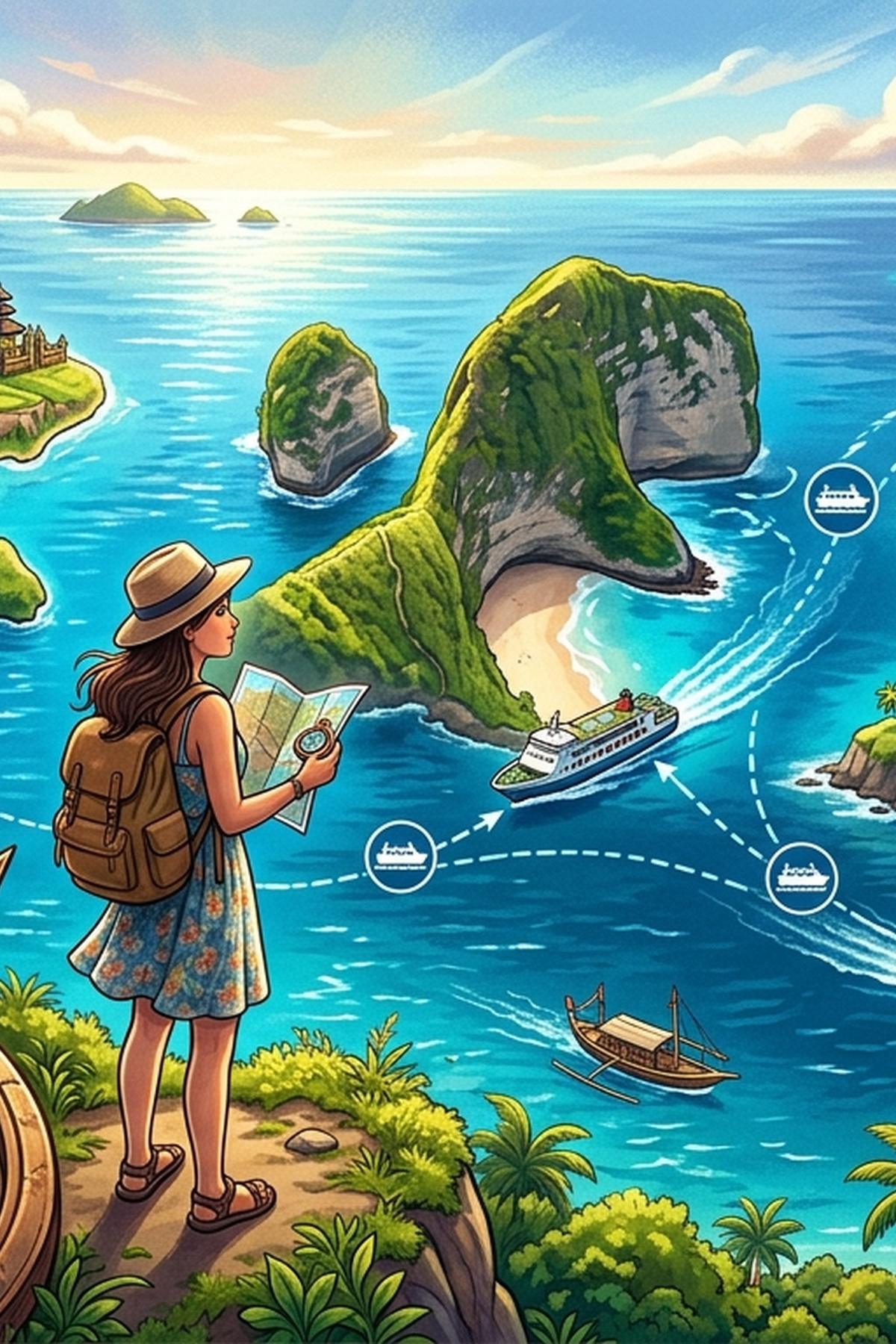
Standing at the Sanur beach walk at 7am, watching touts from four competing fast boat companies wave laminated route maps in your direction, you realize nobody warned you that island-hopping around Bali has actual logistics to sort through. Which port? Which operator? Is the cheap public ferry worth losing most of a day? And does Nusa Penida even need an overnight, or are you better off treating it as a day trip and saving Lombok for a longer stay?
This article breaks it down by route, by cost, and by traveler profile. No marketing language about paradise found. Just the numbers and a framework you can use before you book anything.
Route Snapshot
- Nusa Penida is 30 to 45 minutes from Sanur by fast boat. Tickets run $6 to $10 USD (roughly 100,000 to 150,000 IDR) each way.
- Lombok is 4 to 5 hours from Padangbai by public RORO ferry, or 1.5 to 2.5 hours by fast boat at a considerably higher fare.
- Fast boats to the Gili Islands depart from Amed, Serangan, or Sanur and cost $20 to $40 USD depending on origin and operator.
- Base yourself in Bali for trips under five days. Commit to Lombok as your anchor for seven or more days if trekking or Gili-hopping is the main draw.
- Tracking costs across IDR and USD is easier when you use a dedicated currency and budgeting tool rather than rough mental estimates.
Why This Decision Matters More Than Most Travelers Expect
Bali, Nusa Penida, and Lombok sit close together on a map. That proximity is deceptive. The ferry crossings between them are not symmetrical in time or cost, and the difference shapes how you should structure your entire itinerary, especially if you are working with a week or less.
Most travelers default to staying in Bali and treating everything else as a day trip. That strategy works for Nusa Penida. It does not work for Lombok. A there-and-back to Lombok in a single day leaves you with roughly four usable hours on the island after crossing time. That is not enough to justify the journey, and you would still need to sort onward transport from the ferry terminal at Lembar, which is not close to anything interesting.
The accommodation cost gap is also worth considering early. Budget rooms in Canggu or Seminyak run higher than equivalent properties in the Gili Islands or Senggigi. If minimizing total spend is a priority, basing yourself away from Bali's tourist core can actually come out cheaper per night, even after you factor in ferry fares.
Nusa Penida: The Fast Boat Math
Departure Points and Crossing Times
Almost all fast boats to Nusa Penida depart from Sanur on Bali's east coast. A smaller number of operators run from Serangan, a short distance south of Sanur. The crossing lands at Toyapakeh or Sampalan on Nusa Penida's north coast and takes 30 to 45 minutes in calm conditions. Between December and March, swells can extend that to close to an hour and make the ride genuinely unpleasant.
Operators running this route include Maruti Express, Mola-Mola Express, Angel Billabong Ferry, and several smaller outfits that rotate in and out of the market. Tickets purchased from beach sellers in Sanur run around 100,000 to 150,000 IDR ($6 to $10 USD) per person, per direction. Promotional fares exist, but 150,000 IDR is a reliable planning number for a one-way crossing. Return tickets can be purchased on the island, and prices are broadly consistent across operators.
Day Trip or Overnight?
Nusa Penida is compact enough that a single full day covers the main draws: the Kelingking Beach viewpoint, Angel's Billabong, Broken Beach, and Crystal Bay. Catching the first boat from Sanur at around 7:30am and returning on the last departure around 4:30 to 5pm gives you eight usable hours. That is enough for most travelers.
An overnight adds genuine value under two conditions. First, if you want to snorkel with manta rays at Manta Point in the early morning, before day-trip boats arrive and when mantas are most reliably present. Second, if you want to be at Kelingking at dawn before crowds build. Outside of those specific goals, the savings on a Bali accommodation night rarely outweigh the convenience of keeping your base intact.
Lombok: Two Very Different Ways to Get There
The Public RORO Ferry from Padangbai
ASDP, Indonesia's national maritime transport operator, runs a 24-hour roll-on/roll-off car ferry between Padangbai on Bali's east coast and Lembar on Lombok's west coast. The crossing takes four to five hours. Economy class passenger tickets cost around 50,000 to 75,000 IDR ($3 to $5 USD), making this by far the cheapest option for crossing the Lombok Strait.
The trade-off is significant. You lose the better part of a morning or afternoon. The ferry terminal at Lembar is isolated, with limited facilities, and requires another hour by taxi or shuttle to reach Senggigi or Mataram. Getting to Kuta Lombok or the Mandalika surf area adds another 90 minutes on top of that. The public ferry makes sense if you are bringing a motorbike, connecting to a local bus network, or genuinely operating on the lowest possible budget.
Fast Boats to Lombok and the Gilis
Fast boats targeting independent travelers run from multiple Bali ports to the Gili Islands, with some services stopping at or near Lombok's Bangsal Harbor. Departure options include Sanur, Serangan, Amed, and Padangbai. Prices range from $20 to $40 USD per person depending on origin point, operator, and season. From Amed on Bali's northeast coast, the crossing to Gili Trawangan takes as little as 45 minutes. From Sanur, expect closer to two to two and a half hours.
Operators worth comparing include Gili Getaway, Blue Water Express, and Eka Jaya. Booking through operator websites directly typically saves 10 to 15 percent versus buying through beach agents. Agent booking offers more flexibility for schedule changes, which matters if your plans are still loose.
Comparing Your Crossing Options
Main Ferry Routes: Duration and Fare by Type
| Route | Ferry Type | Duration | Price (USD) | Price (IDR) |
|---|---|---|---|---|
| Sanur to Nusa Penida | Fast boat | 30-45 min | $6-10 | 100,000-150,000 |
| Padangbai to Lembar (Lombok) | Public RORO | 4-5 hrs | $3-5 | 50,000-75,000 |
| Sanur to Gili Trawangan | Fast boat | 2-2.5 hrs | $30-40 | 450,000-600,000 |
| Amed to Gili Trawangan | Fast boat | 45-90 min | $20-30 | 300,000-450,000 |
Prices reflect typical 2025 to 2026 walk-up and online rates. July, August, and late December can push fast boat fares 15 to 20 percent higher than listed ranges.
Estimating What Island-Hopping Actually Costs
The ferry ticket is only one component. Once you layer in accommodation, onward transport from the terminal, food, and activity costs across multiple islands, the total numbers shift considerably depending on where you put your nights.
Nusa Penida offers the cheapest accommodation of the three. A clean guesthouse near Toyapakeh runs $15 to $25 per night. Lombok's Kuta area and Senggigi sit in a similar range. Gili Trawangan runs 30 to 50 percent higher due to tourist concentration on a very small island. Bali sits at every price tier, but the budget floor in Seminyak, Canggu, or Ubud is higher than many first-time visitors anticipate.
Things get complicated when accommodation listings quote IDR and fast boat operators quote USD in the same booking session. Comparing costs accurately across tiers and islands requires doing the conversion math on real figures, not rough mental rounding. Using travel tools built for multi-currency expense comparison keeps your totals honest and makes the trade-offs between accommodation tiers genuinely comparable.
A rough three-island budget for a week, staying in mid-range accommodation, spending two nights on Nusa Penida and four on Lombok before returning through Bali, comes out to approximately $700 to $1,000 USD per person for ferries and accommodation combined, excluding flights. The range widens significantly based on whether you stay on Gili Trawangan versus the mainland Lombok coast.
The Decision Process, Step by Step
Rather than treating this as a vague lifestyle choice, work through it in order. The answer usually becomes clear by the third or fourth step.
- Count your actual usable days. Subtract arrival and departure days from your total trip length. A ten-day trip often yields seven usable island days once airport transfers and orientation time are accounted for.
- Identify one non-negotiable activity. Manta ray snorkeling points firmly toward Nusa Penida. The Rinjani crater rim trek points firmly toward Lombok. The Ubud rice terrace circuit means Bali is your base. One clear anchor simplifies everything downstream.
- Check the ferry departure point relative to your Bali accommodation. Staying in Seminyak or Canggu adds roughly 1.5 hours each way to reach Padangbai for a Lombok crossing. Early morning ferry departures become significantly harder from Bali's west coast.
- Compare accommodation costs per island night at your comfort level. Run the math for each island. Sometimes the ferry fare is cheap but two extra nights on the island cost more than staying put in Bali would have.
- Lock in your return ferry time before booking accommodation. Last fast boats from Nusa Penida typically leave between 4:30pm and 5pm. Missing the return means an unplanned overnight. Book both directions together so the schedule is confirmed before you commit to accommodation.
Rinjani, the Gilis, and Why Lombok Needs More Time
Lombok's reputation rests on two things that cannot be sampled quickly. Mount Rinjani, at 3,726 meters, is Indonesia's second highest volcano and a serious multi-day commitment. The standard route to the crater rim takes two nights. A fuller loop that descends to the crater lake and hot springs requires three nights. Neither version is possible as a side trip from a Bali base.
The Gili Islands are a different proposition and more accessible on a shorter itinerary. Gili Trawangan is party-oriented with strong diving infrastructure and the widest range of accommodation. Gili Meno is quieter, better suited to honeymooners or anyone who wants a slow pace and good snorkeling without the noise. Gili Air sits between the two in atmosphere and crowd level. Small wooden boats connect the three islands for a few dollars, so moving between them is easy once you are in the archipelago.
The fundamental point is that none of this content can be adequately experienced from a Bali base on day trips. Lombok rewards travelers who treat it as the primary destination for five nights or more, using Bali strictly as an arrival and departure hub.
Making the Call Before You Buy That Ticket
Nusa Penida is the right call for divers and snorkelers on a tight schedule. The manta ray and mola-mola sightings around Crystal Bay and Manta Point are among the most reliable in the region. The crossing is short. You lose nothing by keeping your Bali accommodation base in place. For a three-to-five day Bali trip where you want one concentrated day of underwater intensity, Nusa Penida as a day trip is a clean and low-friction decision.
Lombok is the right call if you have at least seven days in the region and want experiences that simply do not exist on Bali. The Rinjani crater hike, the reef systems across the Gilis, and the dramatically uncrowded surf breaks at Kuta Lombok all require physical presence. The ferry is longer, the terminal logistics are more involved, and the payoff is proportional to the effort.
A Bali base with a Nusa Penida day trip suits anyone who values flexibility over depth of immersion. You keep your accommodation sorted, retain easy access to Ubud, Uluwatu, and every temple circuit on the island, and add one strong day trip without disrupting the rest of your schedule. For first-time visitors with fewer than seven days, this structure almost always delivers the most per hour spent.
The outcome to avoid is attempting all three islands in a week without a clear anchor. You will spend more time on boats than expected, arrive at each destination just as you start to orient yourself, and leave without having done justice to any of them. Choose one main island, add one satellite crossing, and leave the third for the next trip. That is a framework rather than a compromise, and it produces better results every time.