Bali vs Thailand: Choosing the Right Destination When There Is Only One Trip
Bali or Thailand for one trip? Compare beaches, scooter culture, seasonal shutdowns like Nyepi and Songkran, and the real weekly cost of each destination.


Bali vs Thailand: Choosing the Right Destination When There is Only One Trip
You lift your head from a long-tail boat and watch the limestone cliffs of Krabi break the morning haze, the water so still it looks lacquered. Halfway across the world, on a black sand shore in Canggu, a digital uPhone closes her laptop to watch the same sun drop into the Indian Ocean. These are two different textures of travel, and picking between them is the big binary decision for anyone booking one trip to Southeast Asia. The Bali vs Thailand question is not about which has better temples or prettier photos. It is about how you want to move through the days: the friction of the journey, the cost of a mistake, and what happens when the weather shuts everything down.
| Axis | Bali | Thailand (Phuket / Krabi / Samui) |
|---|---|---|
| Flight Time From London | 16 h 30 min typical 1 stop total elapsed | 11 h 30 min direct to Bangkok, plus connection |
| Flight Time From Sydney | 6 h 15 min direct | 9 h 30 min typical 1 stop total elapsed |
| Primary Beach Sand | Grey to black volcanic sand (Seminyak, Canggu); white on Uluwatu pocket beaches | White to pale gold sand (Patong, Railay, Chaweng) |
| Peak Dry Season Water Clarity | 5–15 m visibility (Uluwatu, Amed); under 2 m on south coast surf beaches | 5–20 m visibility (Railay, Maya Bay); 2–8 m on Chaweng |
| Scooter Rental Per Day | 80,000–120,000 IDR | 200–300 THB |
| Mid Range Hotel Per Night (High Season) | 500,000–1,200,000 IDR | 1,500–3,500 THB |
| Local Meal Cost | 25,000–45,000 IDR (warung) | 50–80 THB (street food) |
| Domestic Beer (Large Bottle, Store) | 35,000–50,000 IDR | 60–80 THB |
| Minimum Daily Backpacker Budget | 250,000–400,000 IDR | 800–1,200 THB |
| Visa On Arrival Cost (Eligible Nationals) | 500,000 IDR for 30 days (2024 rate, Indonesian Directorate General of Immigration) | 60 days visa exemption on arrival by air (2024 Royal Thai Government Gazette) |
| Peak Season | July–August, December–January | November–March (Andaman); December–August (Gulf) |
| Avoid Window | November–March (wet season) | May–October (Andaman monsoon); November–December (Gulf rain) |
Bali or Thailand for First Southeast Asia Trip
If this is your first trip to Southeast Asia, choose Thailand. The reasons are logistical, not sentimental. Thailand has an extensive public ferry network with more than 20 daily departures on major routes and government-regulated pier fees. You can island hop from Phuket to Koh Phi Phi in two hours, then to Koh Samui via a 55-minute direct flight, then to Koh Tao. The system works. A traveller with no regional experience can navigate it without hiring a driver or negotiating with a private boat operator.
Bali is not a country you island hop across. It is one island with a few satellites. The fast boat from Sanur to Nusa Penida takes 45 minutes, but the roads on Nusa Penida are 60 percent unpaved or severely potholed and unlit at night. A medical evacuation to mainland Bali takes hours and requires a boat. The ride-hailing apps Gojek and Grab are banned from picking up passengers directly at many ferry piers and in Uluwatu and Nusa Penida due to local taxi mafia enforcement. You must walk to a main road or use a marked shelter. That is a high-friction environment for a first-timer.
Thailand also gives you a 60-day visa exemption on arrival for eligible nationalities, extendable by 30 days at a local immigration office for 1,900 THB (2024 rate). Bali grants a Visa on Arrival for 30 days at 500,000 IDR (2024 rate), extendable once for another 30 days at another 500,000 IDR. If you want to stay longer, Thailand is the simpler entry point. Pick Thailand if you want a well-worn trail with low surprise. Pick Bali if you want one deep destination with a single base.
Thailand vs Bali Beaches
Thailand: Classic Tropical Shorelines
The beach comparison is the one place where a clear winner exists by traveller type. Thailand wins for classic tropical shorelines: fine white sand, shallow entry, calm water during the dry season. Railay Beach in Krabi has fine white sand and 5 to 15 metres of clarity in dry season, with limestone karsts rising directly from the water. Maya Bay on Koh Phi Phi hits 10 to 20 metres of clarity in dry season. Koh Samui's Chaweng Beach has fine white sand with 3 to 8 metres of clarity. The long crescent bays of the Andaman coast are what people picture when they think of a beach holiday.Bali: Surf, Cliffs and Volcanic Sand
Bali's shores are different. Seminyak and Canggu have grey to dark volcanic sand with under 2 metres of clarity and strong surf. These are not swimming spots. They are surf beaches, sunset viewing platforms, and backdrop for beach club dining. The white sand exists on pocket beaches at the base of cliffs on the Bukit peninsula: Uluwatu Beach has white sand and 5 to 15 metres of clarity in dry season, but you climb down a cliff to reach it and the current is strong. Sanur Beach has pale gold sand with low to moderate clarity and seagrass beds. Amed and Nusa Penida's Crystal Bay are where the snorkelling and diving lives. Crystal Bay has white sand with 15 to 30 metres of clarity in dry season and access to manta ray sightings that peak April to June but happen year round.The choice is direct. Thailand if you want to lie in shallow, calm, clear water. Bali if you surf, dive, or prefer dramatic cliff-framed coves over long sand crescents.
Bali vs Thailand Cost Comparison
Bali looks cheaper on paper. A local warung meal of nasi goreng or mie goreng costs 25,000 to 45,000 IDR, about 1.50 to 2.70 USD. A Thai street food pad thai costs 50 to 80 THB, about 1.40 to 2.20 USD. The difference is marginal on food. The gap opens on accommodation. A mid-range hotel room in a Bali beach area in high season runs 500,000 to 1,200,000 IDR, roughly 30 to 72 USD. In Thailand, a comparable mid-range room in Phuket or Koh Samui high season costs 1,500 to 3,500 THB, about 42 to 97 USD. Bali is cheaper for rooms.
Hidden Costs That Close the Gap
But the cost comparison is not just nightly rates. The Bali tourist tax of 150,000 IDR is now payable on arrival. Visa on Arrival costs 500,000 IDR. If you ride a scooter without an International Driving Permit endorsed for motorcycles, the police fine will add to your bill. In Thailand, the visa exemption is free for 60 days. The trap in Thailand is the ferry system: a one-way ferry from Phuket to Koh Phi Phi costs 600 to 900 THB, and you will take multiple ferries if you island hop. In Bali, a fast boat from Sanur to Nusa Penida runs 150,000 to 250,000 IDR one way. But you must also budget for the driver or taxi to the pier, and the ride from the pier to your accommodation on the other side.The scooter rental scam is a cost risk in both places. Owners demand exorbitant cash for pre-existing damage upon return in Phuket and Bali. Photograph every panel and the fuel gauge in their presence at pickup. In Bali, a daily scooter rental costs 80,000 to 120,000 IDR. In Thailand, 200 to 300 THB. On a week-long trip, the cheapest option is Bali by roughly 15 percent overall, but the margin is small enough that the decision should not rest on cost alone. Budget travellers on minimum daily spends will find Bali marginally cheaper at 250,000 to 400,000 IDR per day against Thailand at 800 to 1,200 THB per day.
Bali or Thailand for Digital Nomads
Bali wins this category. The digital uPhone infrastructure is more developed and concentrated. Canggu and Ubud are built around the remote working lifestyle: robust cafe culture, co-working spaces, a social scene that revolves around laptop work followed by sunset smoothie bowls and surf sessions. The 4G coverage is excellent across Seminyak, Canggu, and Ubud. A Telkomsel tourist SIM from an official shop costs around 150,000 IDR for 25 GB. Buy it from a shop, not the airport, where data-thin packages are overpriced.
The Traffic Tax on Your Workday
Canggu has traffic congestion that crawls at 10 to 15 km per hour during peak hours from 4 to 6 PM along the Seminyak-Canggu corridor. The drive to Ubud in peak hour takes 1 hour 30 minutes to 2 hours for a 25 km distance. That is a significant friction cost on a working day. Many digital nomads stay in Ubud and avoid the south coast traffic entirely, or stay in Canggu and work from nearby cafes. In Ubud, the dominant mode is the rented scooter, same as everywhere else, at 80,000 to 120,000 IDR per day.Thailand's uPhone Scene
Thailand has digital uPhone hubs on Koh Samui and Koh Phangan, but the scene is smaller and more fragmented. Phuket has co-working spaces in Kata and the Chalong area, but Patong is not a work-friendly base. The Thai tourist SIM from AIS costs around 300 THB for 15 days unlimited and is available at airports and 7-Eleven. The visa advantage in Thailand is better: 60 days visa exemption, extendable by 30 days at an immigration office for 1,900 THB. Bali gives you 30 days on arrival with one 30-day extension. For a digital uPhone staying two or three months, Thailand is the easier visa process. For community, infrastructure, and lifestyle, Bali is the stronger choice.Worth it if
- Island hopping infrastructure: extensive, well-regulated ferry network with frequent daily departures, lower logistical friction than Bali
- Beach quality: white sand, calm water, high clarity at Railay, Maya Bay, Koh Nang Yuan during dry season
- Visa simplicity: 60-day visa exemption on arrival for eligible nationalities, extendable by 30 days at immigration office for 1,900 THB (2024 rate)
- Traffic manageable: Phuket peak hour speeds 15–25 km/h, Koh Samui ring road 30–40 km/h with no gridlock
- Dive density: more than 25 named dive sites within a 30-minute boat radius from Koh Tao, average fun dive cost 800–1,200 THB including equipment
- Low entry barrier for first-timers: public ferries, regulated pier fees, government safety oversight
Skip it if
- Andaman monsoon season (May to October) cancels ferries and closes dive sites; Gulf Coast rain peaks November to December
- Patong and Chaweng are loud, dense, party-first corridors that alarm some travellers
- Songkran (13–15 April) means being soaked non-stop for three days; avoid unless attending
- Ferry safety on Andaman routes inconsistent; speedboats in rough seas are genuinely dangerous and luggage often gets soaked
- Koh Phangan around Full Moon Party: accommodation books solid and prices triple for the weekend
- Ride-hailing apps limited: Grab operational in Phuket and Koh Samui but absent on Koh Tao, limited on Koh Phangan; walk to main road required at some piers
Seasonal Closures: What Can Ruin Your Trip
Two events can destroy a carefully planned itinerary, one in each destination. In Bali, it is Nyepi. The Balinese Day of Silence shuts down the entire island. No flights. No traffic. No lights. No hotel entertainment. You stay inside your accommodation for 24 hours. If you booked a seven-day trip and your flight lands two days before Nyepi, you lose one-seventh of your holiday to silence. Nyepi dates change each year. Check the Balinese calendar before booking.
Monsoon Windows You Must Respect
In Thailand, the Andaman monsoon runs May to October. Rough seas on the Andaman coast cancel ferries from Phuket, Krabi, and Koh Phi Phi. Dive sites close. Speedboats run anyway in conditions that are genuinely dangerous. The Gulf of Thailand has its own monsoon from October to December. Koh Samui, Koh Phangan, and Koh Tao see heavy rain and rough transfers during November and early December. If your trip falls into these windows, choose the coast that is in dry season. Andaman dry season is November to April. Gulf dry season is March to September. Do not schedule a May trip to Koh Phi Phi. You risk losing the beach days to weather.High Tide of Tourists
The other seasonal risk is peak crowds. Bali high season runs July to August and December to January. Thailand Andaman coast high season runs November to March. Koh Samui high season runs December to August. Prices double on accommodation. Ferries are overbooked. Book anything in these months at least 90 days ahead or accept that you pay a premium for whatever remains. The minimum days you need for either destination is 10. Any less and ferry transfers and check-in logistics consume your time.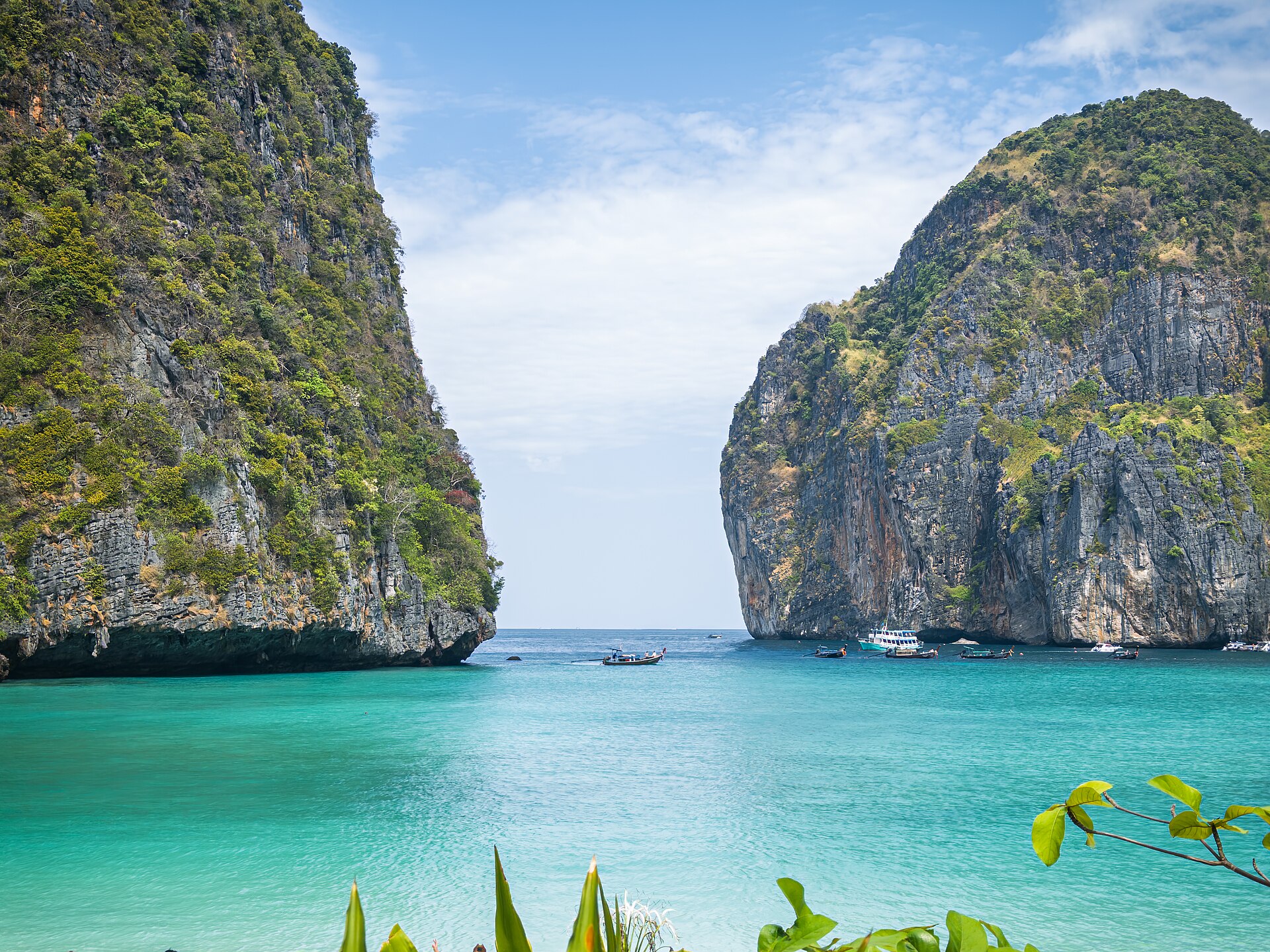

Getting Around: the Real Friction
The biggest trip-up in both destinations is the rented scooter. The single most common mistake is riding without an International Driving Permit endorsed for motorcycles. The police fine in both places is expensive and unavoidable if you are stopped. In Bali, the scooter is the dominant mode. You will ride it from Canggu to Ubud, to the rice terraces at Tegallalang, to the temples. But the traffic congestion on the Canggu-Seminyak corridor crawls at 10 to 15 km per hour during peak hours from 4 to 6 PM. The drive from Canggu to Ubud takes 1 hour 30 minutes to 2 hours for a 25 km distance. Thailand has better traffic on Koh Samui where the ring road moves at 30 to 40 km per hour with no gridlock. Phuket traffic is moderate at 15 to 25 km per hour during peak hours from 5 to 7 PM.
Ferry Transfers Cost You A Day
Underestimating ferry transfer days is the mistake that ruins the most itineraries. A journey from Phuket to Koh Samui or from Bali to the Gili Islands consumes an entire day when you factor in hotel checkout, pier transfers, waiting for late boats, and the final ride to your next bed. Scheduling back-to-back two-night stays across three islands leaves you with almost no beach time. The ferry from Phuket to Koh Phi Phi takes 2 hours. The long-tail boat from Ao Nang to Railay takes 15 minutes. The fast boat from Sanur to Nusa Penida takes 45 minutes. Each of these is a half-day affair when you account for the logistics on either end.Bali Entry Tax and Airport Queues
The Bali tourist tax of 150,000 IDR is now payable on arrival. The queues at Denpasar immigration can exceed 90 minutes without the electronic visa on arrival pre-applied. If you arrive during a peak-hour flight batch, budget 2 hours from landing to leaving the terminal. In Phuket, the airport transfer to Patong or Kata is 45 to 90 minutes and costs 700 to 1,000 THB by taxi or pre-booked car. In Bali, the airport transfer to Seminyak or Canggu is 45 to 90 minutes and costs 250,000 to 400,000 IDR. To Ubud it is 90 to 120 minutes at 350,000 to 500,000 IDR. Ignore touts and use official counters or ride-hailing apps where they operate.What Each Destination Punishes You for Not Knowing
Thailand
Thailand punishes you for not knowing the ferry safety reality on the Andaman coast. Speedboats in rough seas between May and October are genuinely dangerous. Luggage gets soaked in transit. The 4G coverage on Koh Tao suffers brief blackouts in heavy rain. Download offline Google Maps for each island before you travel. Ferry piers are poorly signposted. The country also punishes you for not knowing that ride-hailing apps are banned from picking up passengers directly at many ferry piers. You must walk to a main road or use a marked shelter. In Koh Tao, Grab is absent entirely. You rely on local taxis or your own scooter.Bali
Bali punishes you for not knowing the Nusa Penida road condition. 60 percent of the roads are unpaved or severely potholed. Your max speed is 20 to 30 km per hour on main routes. Driving a scooter after dark is dangerous because there are no streetlights. A medical evacuation to mainland Bali takes hours and requires a boat. Bali also punishes you for not knowing the temple entry requirement. Sarongs and sashes are mandatory for entering Bali temples. They are available for rent at major temples like Uluwatu Temple which costs 50,000 IDR entry, but if you arrive in shorts and no sarong you pay the rental fee and stand in a queue. The interior cultural sites at Ubud include the Sacred Monkey Forest at 80,000 IDR entry and Tegallalang Rice Terraces at 25,000 IDR entry plus donation requests. The aggressive monkeys at Uluwatu Temple will steal anything not secured.The Honest Caveat
Neither destination is a secret. The region is a patchwork of heavily developed tourist strips and pockets of quiet, and first-timers are often surprised by the sheer volume of fellow travellers. If you want untouched solitary wilderness or genuine cultural immersion, both Bali and Thailand will frustrate you. The relentless party infrastructure on Koh Phi Phi, the gridlock in Canggu, the aggressive touting on Seminyak beaches, the Full Moon Party crowds on Koh Phangan that run 10,000 to 30,000 attendees every month: these are not bugs. They are features of the most popular beach destinations on the planet. The question is not which is better. It is which kind of crowd and which kind of friction you are willing to pay for.
Read next
-
 Phuket
Pick a Phuket beach by airport transfer time, noise level after dark, and whether you want nightlife, family shallows, or a surf break.
Phuket
Pick a Phuket beach by airport transfer time, noise level after dark, and whether you want nightlife, family shallows, or a surf break.
-
 Best Time to Visit Thailand and Bali Two Monsoons Three Coasts
Two monsoon systems, three coasts, one calendar: when to visit Thailand and Bali so you chase sun not storms, with month-by-month weather and pricing.
Best Time to Visit Thailand and Bali Two Monsoons Three Coasts
Two monsoon systems, three coasts, one calendar: when to visit Thailand and Bali so you chase sun not storms, with month-by-month weather and pricing.
-
 Thailand Island Hopping Ferries How the Islands Actually Connect
Ferry connections across Thailand's islands and Bali to Nusa Penida: real door-to-door transfer times, speedboat safety, and why transfer days eat a full day.
Thailand Island Hopping Ferries How the Islands Actually Connect
Ferry connections across Thailand's islands and Bali to Nusa Penida: real door-to-door transfer times, speedboat safety, and why transfer days eat a full day.
-
 Thailand and Bali Itineraries for Two Weeks Three Weeks and What Fits
Realistic Thailand and Bali itineraries for 10 days, two weeks, and three weeks that account for ferry transfer days eating a full day each.
Thailand and Bali Itineraries for Two Weeks Three Weeks and What Fits
Realistic Thailand and Bali itineraries for 10 days, two weeks, and three weeks that account for ferry transfer days eating a full day each.
-
 Thailand and Bali Budget Islands What a Week Actually Costs Island by Island
Island-by-island weekly budgets for Thailand and Bali: real nightly rates, street food prices, scooter rental, and the hidden costs that blow the plan.
Thailand and Bali Budget Islands What a Week Actually Costs Island by Island
Island-by-island weekly budgets for Thailand and Bali: real nightly rates, street food prices, scooter rental, and the hidden costs that blow the plan.
-
 Scooters Boats and the Sea in Thailand and Bali What Actually Goes Wrong
Scooter rental scams, ferry safety in rough seas, and Nusa Penida road risks: what actually goes wrong in Thailand and Bali and how to avoid it.
Scooters Boats and the Sea in Thailand and Bali What Actually Goes Wrong
Scooter rental scams, ferry safety in rough seas, and Nusa Penida road risks: what actually goes wrong in Thailand and Bali and how to avoid it.
-
 Koh Samui vs Koh Phangan vs Koh Tao Which Gulf Island to Choose
Compare Koh Samui, Koh Phangan, and Koh Tao on beaches, nightlife, diving, and ferry logistics to choose the right Gulf of Thailand island for your trip.
Koh Samui vs Koh Phangan vs Koh Tao Which Gulf Island to Choose
Compare Koh Samui, Koh Phangan, and Koh Tao on beaches, nightlife, diving, and ferry logistics to choose the right Gulf of Thailand island for your trip.
-
 Bali, Lombok, or Nusa Penida — Ferry Routes, Real Costs, and How to Decide
Compare ferry routes, crossing times, and real ticket prices for Bali, Lombok, and Nusa Penida — then match the right island to your trip length and goals.
Bali, Lombok, or Nusa Penida — Ferry Routes, Real Costs, and How to Decide
Compare ferry routes, crossing times, and real ticket prices for Bali, Lombok, and Nusa Penida — then match the right island to your trip length and goals.